
Welcome to the Timeless World of the Panchatantra
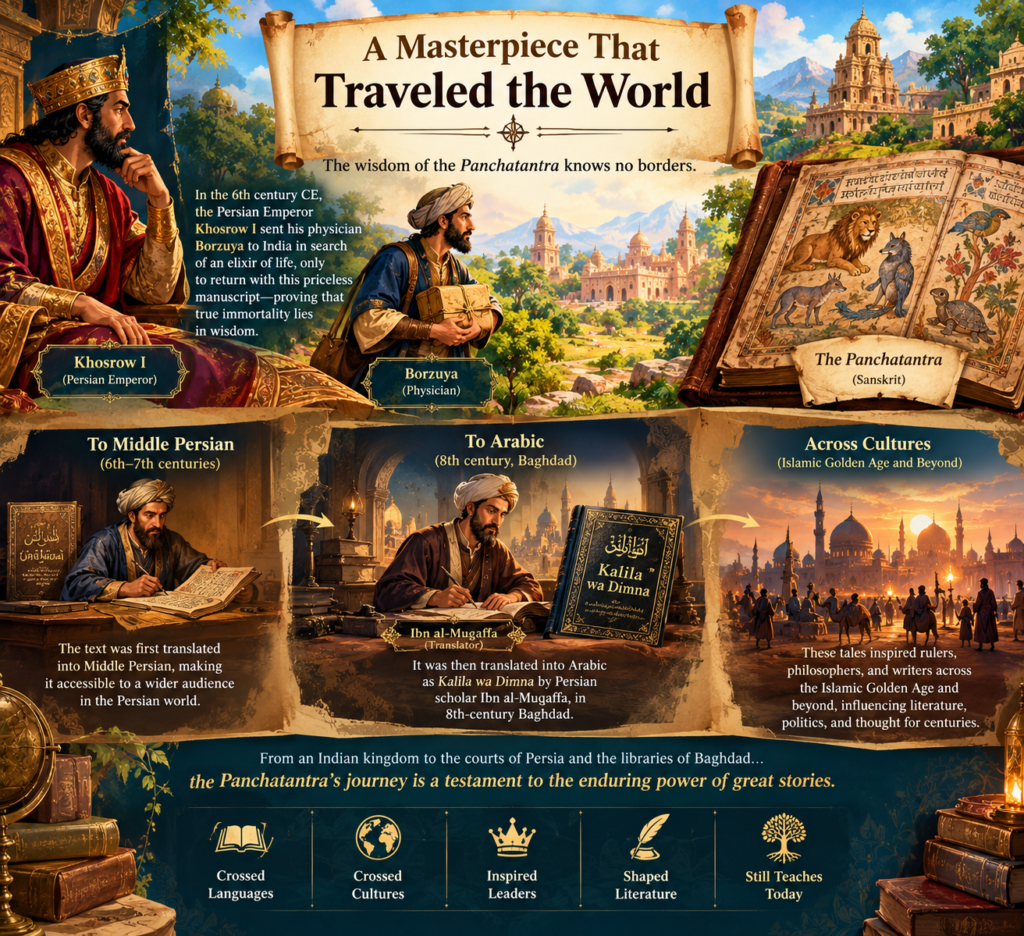
Long before modern political treatises or psychological guidebooks, an ancient Indian scholar named Pandit Vishnu Sharma faced a formidable challenge: teaching three undisciplined princes the complex arts of statecraft, diplomacy, and human nature. His solution was not a series of dry lectures, but a vibrant world of talking lions, scheming jackals, loyal crows, and wise turtles.
Written over two millennia ago, the Panchatantra (“The Five Principles”) was conceived as a mirror for princes—a masterclass in strategy disguised as captivating folklore. Divided into five distinct books, these interwoven animal fables explore critical life lessons: how to form lasting alliances, outsmart cunning rivals, navigate betrayal, and make wise decisions when faced with conflict.
A Masterpiece That Traveled the World
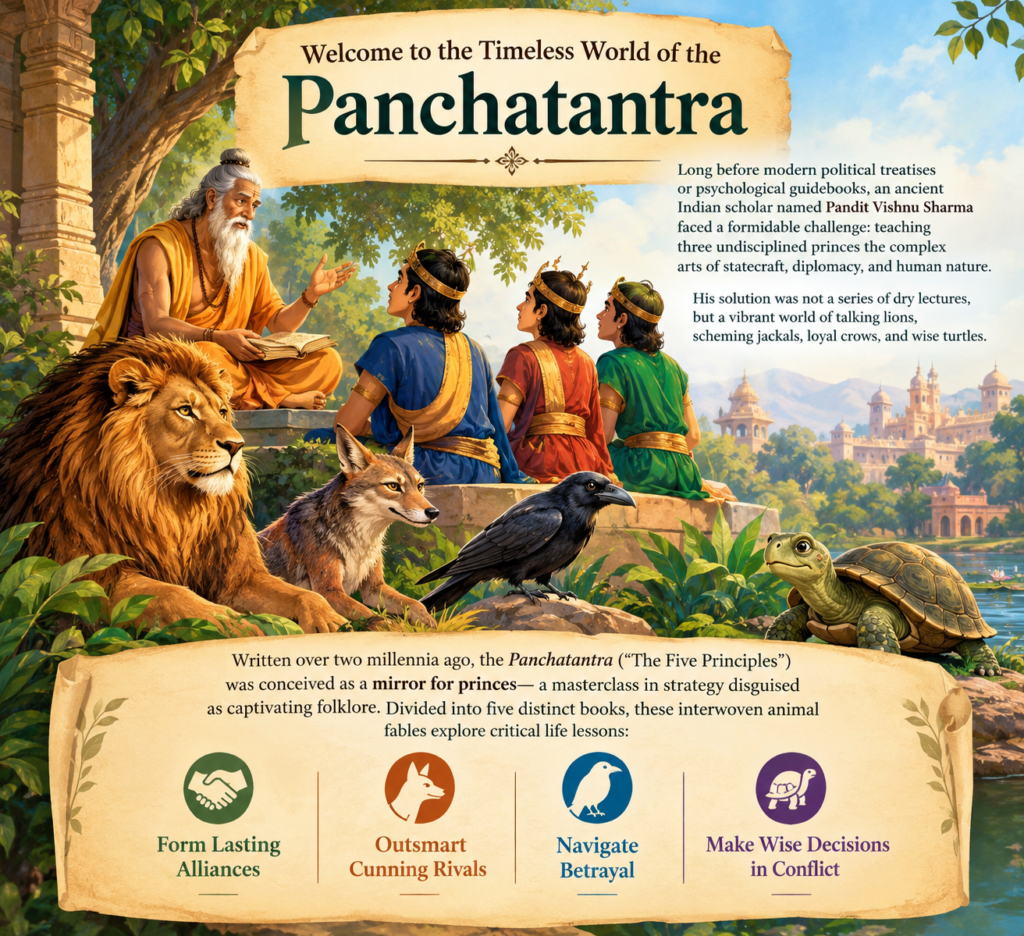
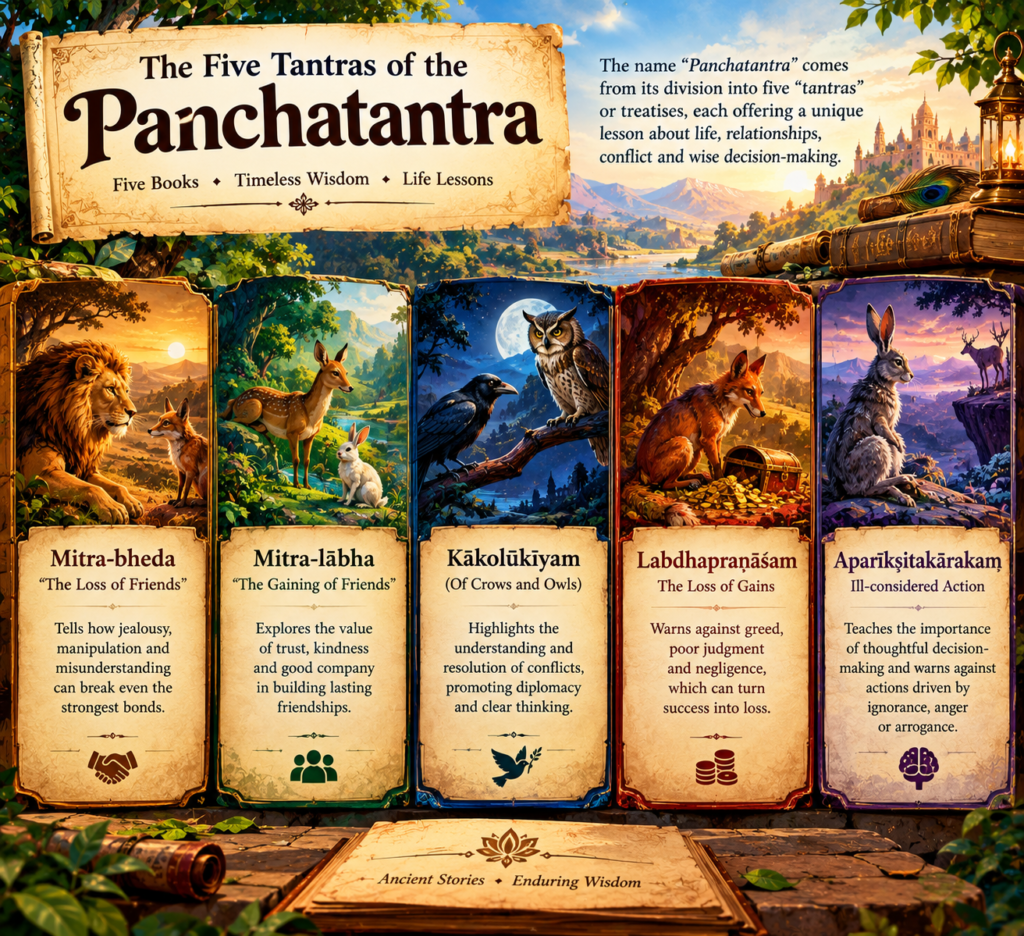
The wisdom of the Panchatantra knows no borders. In the 6th century CE, the Persian Emperor Khosrow I sent his physician Borzuya to India in search of an elixir of life, only to return with this priceless manuscript—proving that true immortality lies in wisdom. Translated into Middle Persian and later into Arabic as Kalila wa Dimna by Persian scholar Ibn al-Muqaffa in 8th-century Baghdad, these tales inspired rulers, philosophers, and writers across the Islamic Golden Age.
In 16th-century Herat, scholar Husayn Va’iz Kashifi transformed the tales into Anvar-i Suhayli (The Lights of Canopus)—an ornate, poetic masterpiece that captivated readers across the Persianate world and Mughal India. As the fables moved into Europe, they inspired 17th-century French fabulist Jean de La Fontaine, who openly credited his stories to “Pilpay, the Indian sage.”
Over the centuries, the original author’s Sanskrit name, Vidyapati, underwent phonetic shifts as it moved across languages—evolving into Bidpai in Persian and Arabic, and ultimately becoming Pilpay in European scholarship.
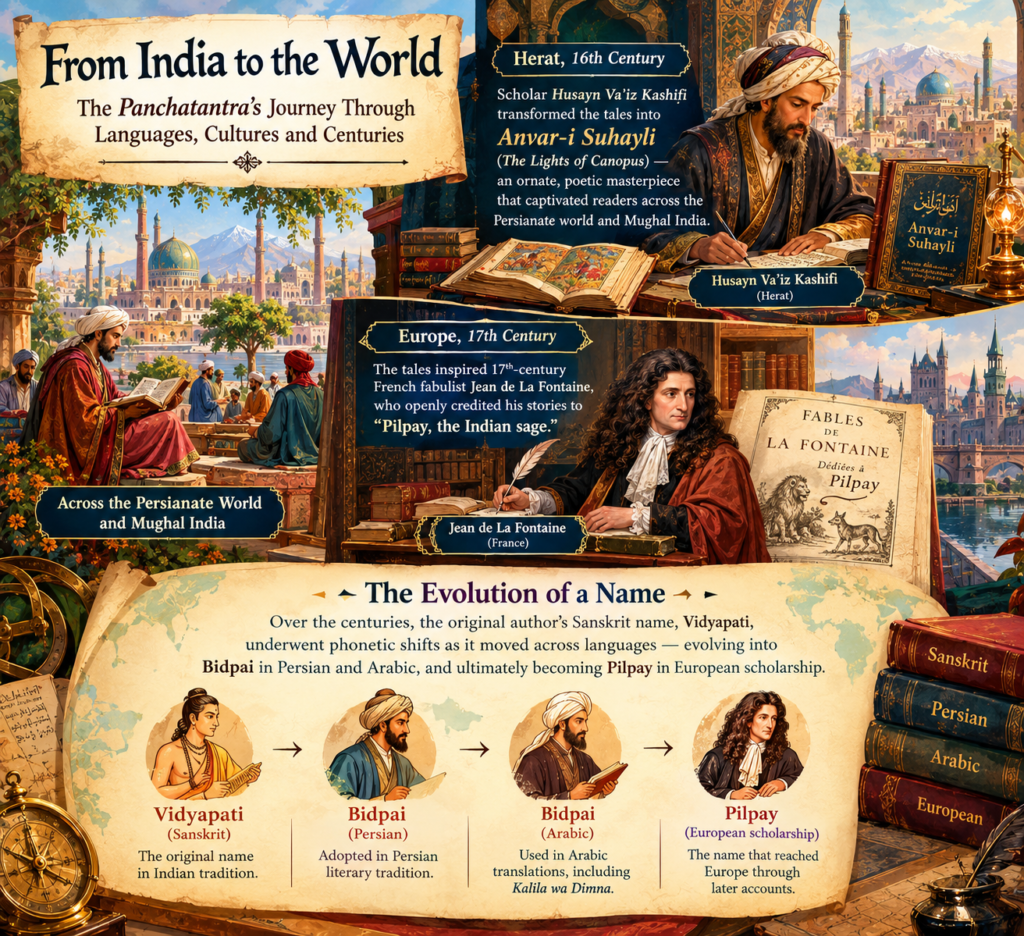
Many questions have been asked about the origin and authorship of the Panchatantra stories, such as:
Who wrote the Panchatantra?
Who wrote the Panchatantra in Sanskrit?
Who is the writer or author of the Panchatantra?
What is the Panchatantra?
What is the purpose of the Panchatantra?
What is the theme of the Panchatantra?
What is the principle of the Panchatantra?
What are the values of the Panchatantra?
What lessons do we learn from the Panchatantra?
What is the teaching of the Panchatantra?
What are the five “tantras” of the Panchatantra?
I have made a genuine attempt to answer the above questions to satisfy my readers’ curiosity.
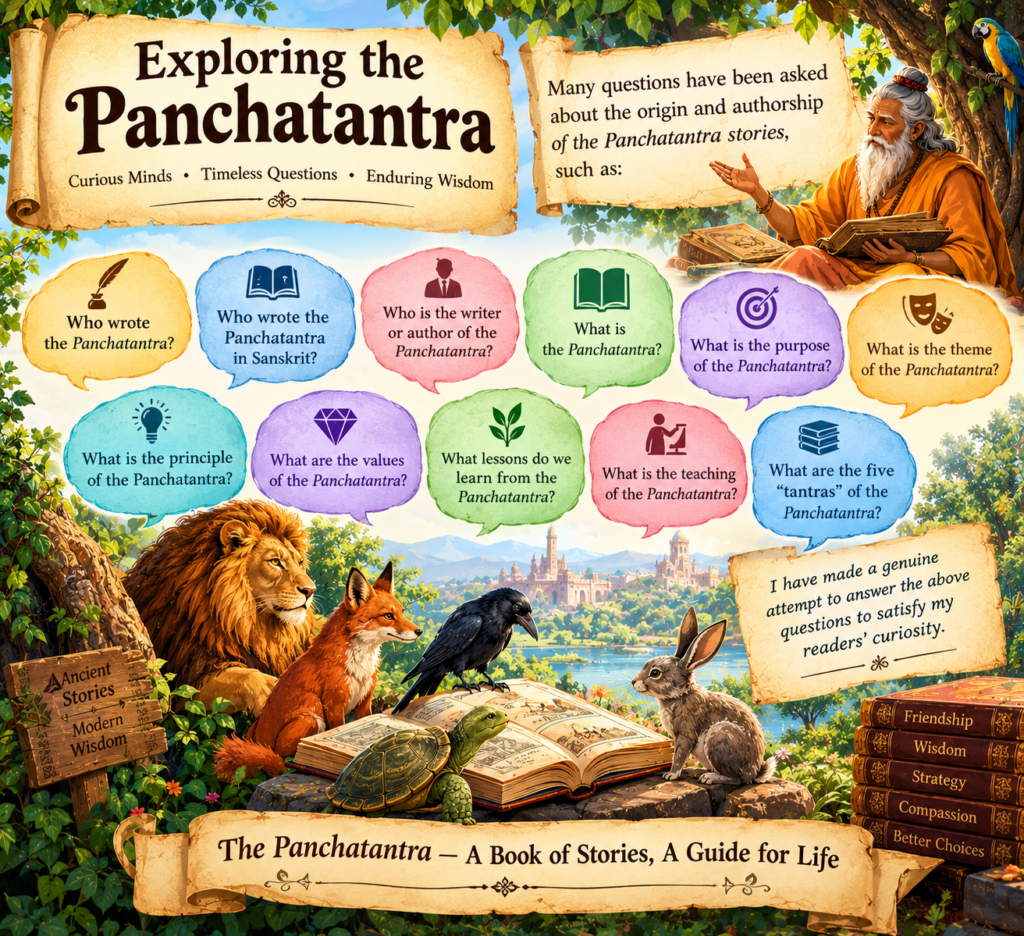
Thousands of years ago, there was a king in South India. He had three young sons who were good-for-nothing. Stupid and idle, they had no interest in learning. The king tried his best to have them educated, but all his efforts were in vain.
On the advice of his courtiers, the king contacted a highly reputed scholar named Vishnu Sharma. The great scholar agreed to take on the task of educating the princes, assuring the king that within six months he would make them masters in the art of successful living and in managing the affairs of the state.
Vishnu Sharma simply told them charming fables. These stories created in the princes a keen interest in learning, and their lessons stayed with them. These instructive moral stories make up the Panchatantra.
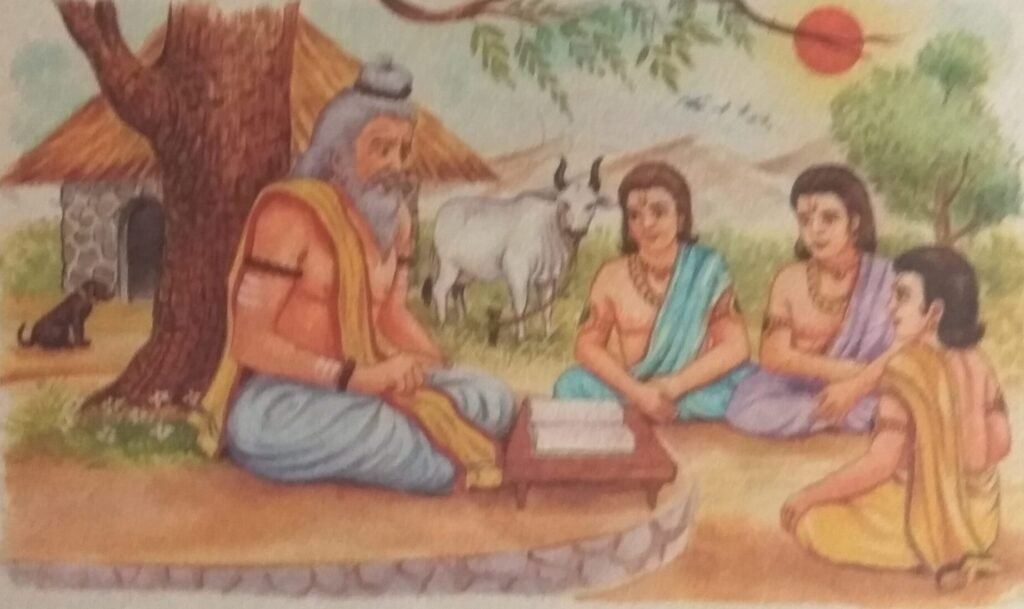
The name “Panchatantra” comes from its division into five “tantras” or treatises:
- Mitra-bheda: Focuses on “The Loss of Friends.”
- Mitra-lābha: Focuses on “The Gaining of Friends.”
- Kākolūkīyam (Of Crows and Owls): Highlights the understanding and resolution of conflicts, promoting diplomacy and clear thinking through tales involving crows and owls.
- Labdhapraṇāśam: Focuses on “Loss of Gains” due to greed, poor judgment, and negligence.
- Aparīkṣitakārakaṃ: Deals with “Ill-considered Action” that results from ignorance, anger, or arrogance, teaching the importance of thoughtful decision-making.
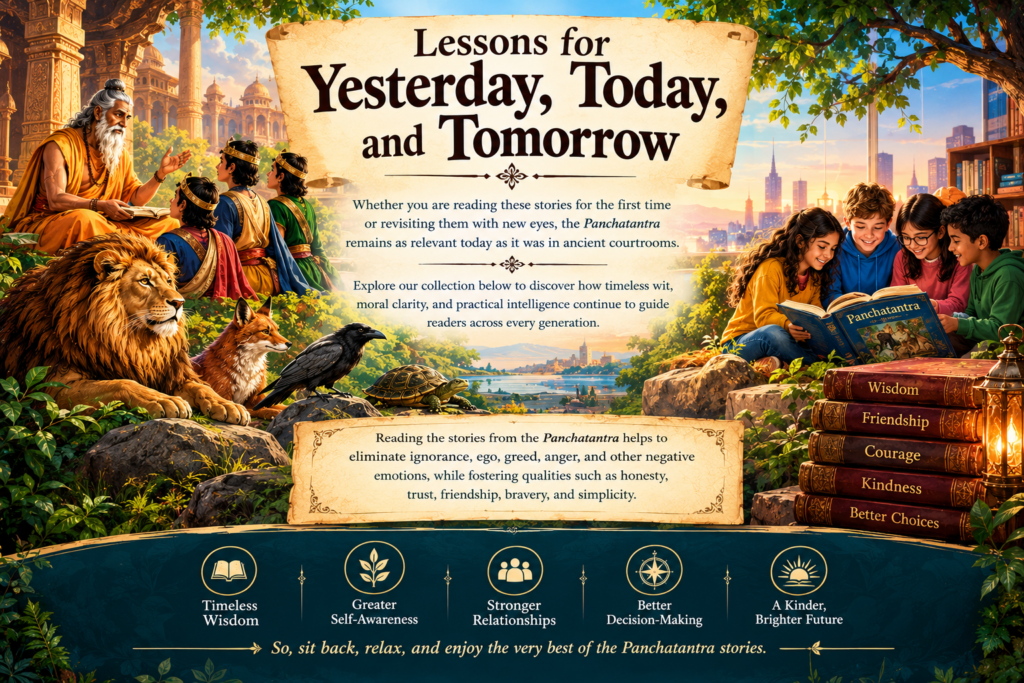
Lessons for Yesterday, Today, and Tomorrow
Whether you are reading these stories for the first time or revisiting them with new eyes, the Panchatantra remains as relevant today as it was in ancient courtrooms. Explore our collection below to discover how timeless wit, moral clarity, and practical intelligence continue to guide readers across every generation.
Reading the stories from the Panchatantra helps to eliminate ignorance, ego, greed, anger, and other negative emotions, while fostering qualities such as honesty, trust, friendship, bravery, and simplicity.
So, sit back, relax, and enjoy the very best of the Panchatantra stories.
- 14 Best Panchatantra ki Kahaniya-पंचतंत्र की सम्पूर्ण कहानियाँ
- 15 Best Children Stories in English from Panchatantra 2.0
- 16 amazing Aesop ki Kahaniya-ईसप की दंतकथाएँ
- 17 Best Aesop's Fables with moral lessons for children
- Arabian Nights
- Author's Best Written Stories in English
- Author's Best Written Stories हिंदी में-लेखक की सर्वश्रेष्ठ कहानियाँ
- Baital Pachisi बैताल पचीसी हिंदी में
- Bedtime Stories for All
- Hindi Love Stories-प्रेम और रोमांस की कहानियों
- Love and Romance
- Professor Yasser Ki Class: दास्तान-ए-यासिर
- Professor Yasser's Lectures
- Vikram and Betal series: Riddle Solving Stories
You can join my WhatsApp Channel by clicking the link here


bookmarked!!, I love your blog!