


रचना: युवा मस्तिष्कों की प्रयोगशाला
नेपाल के भरतपुर में स्थित ईमान यूनिवर्सिटी की मेहराबदार खिड़कियों से सुबह की धूप की सुनहरी किरणें छनकर आ रही थीं—यह यूनिवर्सिटी वैदिक और इस्लामी विद्वत्ता का एक प्राचीन संगम स्थल रही है। इतिहास विभाग के खचाखच भरे व्याख्यान कक्ष (लेक्चर हॉल) के भीतर, छात्र कतारों के बीच ज़मीन पर पालथी मारकर बैठे थे और दरवाजों पर छात्रों का हुजूम खड़ा था। यह बात हर तरफ फैल चुकी थी कि प्रोफेसर यासिर आज नागरिक शास्त्र (Civics) पर व्याख्यान देने वाले हैं, और उनका यह समय इससे अधिक सटीक और सामयिक नहीं हो सकता था। अभी कुछ ही महीने पहले, इस देश ने एक विशाल युवा आंदोलन देखा था जिसने सत्ता के गलियारों को हिलाकर रख दिया था।
वह हॉल बिल्कुल साधारण और आडंबरहीन था—सफेद रंग से पुती दीवारें, नेपाल के संविधान निर्माताओं के चित्र, और लंबी खिड़कियाँ जिनसे गेंदे के फूलों की भीनी-भीनी खुशबू भीतर आ रही थी। श्यामपट्ट (ब्लैकबोर्ड) के ऊपर, हाथ से लिखे एक बैनर पर नेपाली और अरबी में लिखा था: “पालने से लेकर कब्र तक ज्ञान की खोज करो (“Seek knowledge from the cradle to the grave”)।”
प्रोफेसर यासिर ने एक शांत गरिमा और अधिकार के साथ प्रवेश किया। उनकी सफेद-काली दाढ़ी सलीके से कटी हुई थी, उनका कुर्ता एकदम कड़क था, और तार के फ्रेम वाले चश्मे के पीछे उनकी आँखों में एक ऐसी चमक थी, मानो वे लोगों की सुविधाजनक और स्थापित धारणाओं को झकझोरने वाले हों। भारतीय मूल के और प्रशिक्षण से एक इतिहासकार होने के बावजूद, उनका वास्तविक विषय राजनीतिक हेरफेर के प्रभाव में मानव मस्तिष्क की कार्यप्रणाली का अध्ययन था।
“अस्सलामु अलैकुम व रहमतुल्लाही व बरकातुहू (आप पर सलामती हो और अल्लाह की रहमत और उसकी बरकतें हों),” उनकी आवाज़ पूरे हॉल में गूंज उठी।
“व अलैकुमुस्सलाम व रहमतुल्लाही व बरकातुहू (और अल्लाह की सलामती, रहमत और बरकतें आप पर भी हमेशा बना रहे),” छात्रों ने एक स्वर में गरजते हुए उत्तर दिया। वे मानसिक व्यायामशाला—तर्कसंगत सोच, ठोस तथ्य और तर्क—के लिए पूरी तरह तैयार थे।
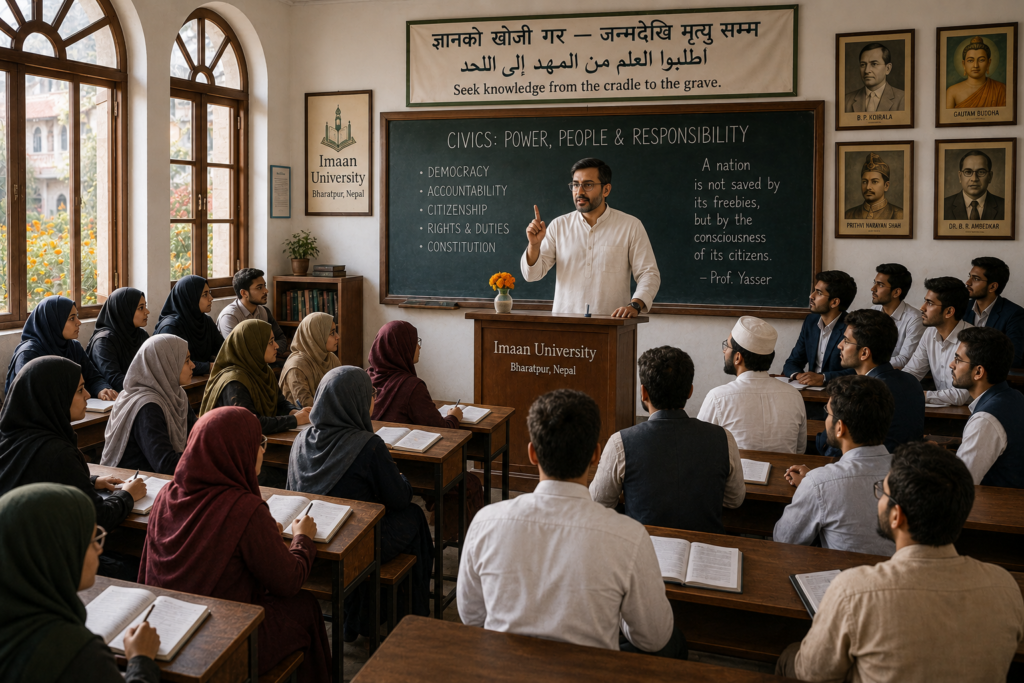
उकसावा: एक जार में चूहा
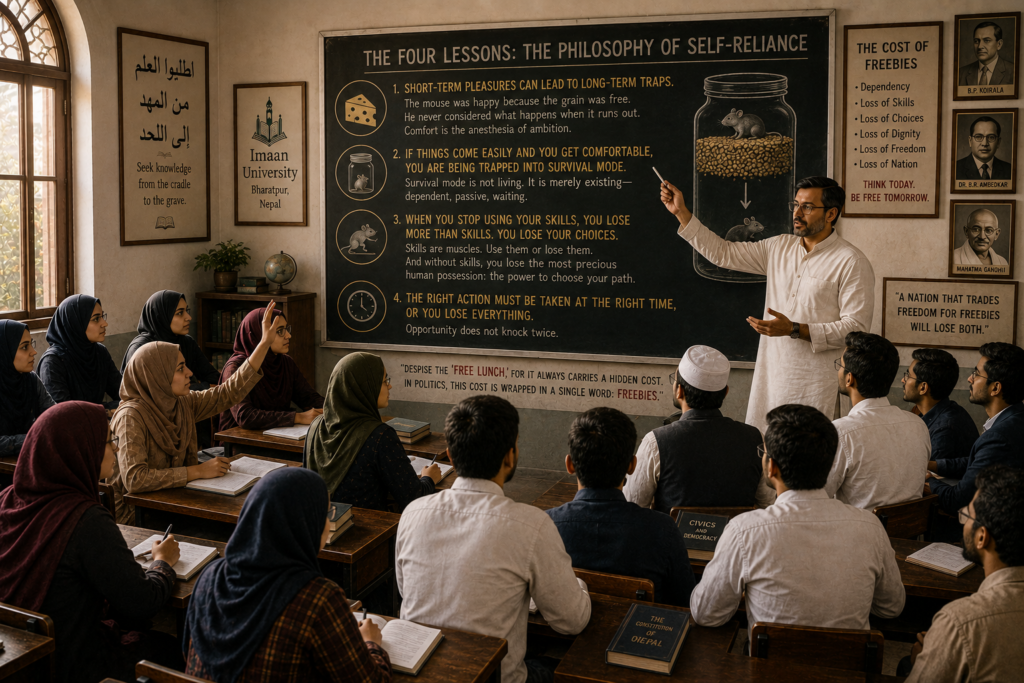
प्रोफेसर यासिर ने प्रोजेक्टर चालू किया। स्क्रीन पर एक शीर्षक के साथ एक चित्र उभरा: “एक जार में चूहा।” पहले जार (मर्तबान) में अनाज भरा हुआ था, और ऊपर एक मोटा-ताज़ा चूहा संतुष्ट होकर बैठा था। दूसरा जार (मर्तबान) लगभग खाली था, और वही चूहा उसके नीचे फँसा हुआ ऊपर की ओर बेबसी से ताक रहा था।
“शीर्षक पढ़िए। चित्र देखिए। मुझे बताएं कि आपको क्या दिखाई देता है।”
ज़हीरा ने हाथ उठाया। “एक भाग्यशाली चूहा, जो मज़े से रह रहा है क्योंकि जार (मर्तबान) अनाज से भरा हुआ है।”
सादीका ने तुरंत हाथ खड़ा कर दिया। “एक चूहा जो अपनी सपनों की ज़िंदगी जी रहा है।”
पूरी कक्षा हँसी से गूंज उठी।
“और दूसरा जार?” प्रोफेसर यासर ने अपना लहजा बदलते हुए पूछा।
यह्या ने हिचकते हुए कहा। “आधा-खाली जार… जो इस उम्मीद में है कि अल्लाह कोई चमत्कार करके उसे भर देंगे।”
नुमान बीच में कूद पड़ा। “घबराने की क्या बात है? जो भी होता है, किसी वजह से होता है। बेहतर है आशावादी रहो और कहो कि जार आधा-भरा है।”
मक़सूद ने उसकी ओर बेरुखी से देखा और कहा, “गंभीर हो जाओ। खयाली पुलाव हर समय काम नहीं आते।”
“आइए, प्रोफेसर से पूछते हैं,” सुमैया ने बहस को बीच में काटते हुए कहा।
प्रोफेसर यासिर ने अपनी बाँहें समेट लीं। “मुझे जो दिखता है, वह यह है।”
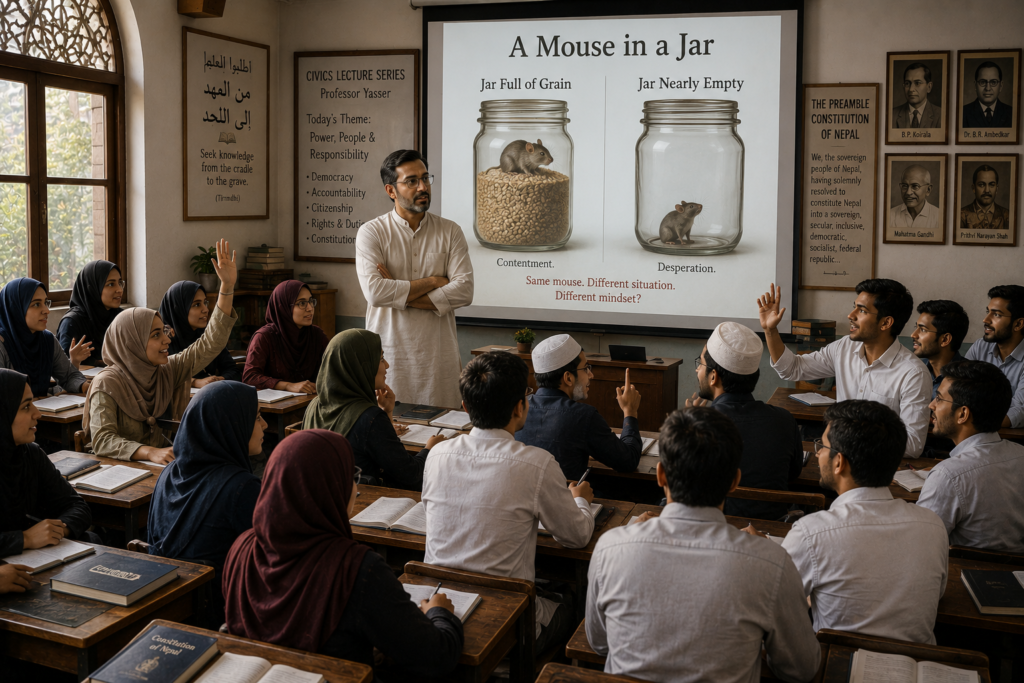
दृष्टांत का विश्लेषण: निर्भरता की आंतरिक संरचना
कमरे में सन्नाटा छा गया।
“एक चूहे को अनाज से भरे जार के बिल्कुल ऊपरी हिस्से पर रख दिया गया। वह फूला नहीं समा रहा था—न कहीं भागने की ज़रूरत थी, न ढूंढने की, और न ही कोई संघर्ष करने की। वह आराम से खा सकता था, सो सकता था और मज़े से रह सकता था। वह उस जगह को छोड़कर क्यों जाता? जार बेहद आरामदायक था और अनाज प्रचुर मात्रा में था।”
वे कुछ पल के लिए रुके। “लेकिन कुछ ही दिनों में, वह जार के बिल्कुल तह (नीचे) तक पहुँच गया। अनाज लगभग खत्म हो चुका था। अब वह उसमें फंस चुका है। जार की दीवारें बहुत ऊंची और बहुत चिकनी हैं। वह चाहकर भी चढ़कर बाहर नहीं निकल सकता। अब वह पूरी तरह से किसी और पर निर्भर है जो उस मर्तबान में अनाज डाले। यह भी मुमकिन है कि उसे उसकी पसंद का अनाज न मिले। और अगर किसी ने इसे दोबारा नहीं भरा, तो वह उसी जगह भूख से तड़पकर मर जाएगा जो कभी उसे जन्नत जैसी लगती थी।”
वे पूरी कक्षा की तरफ मुड़े। “इस पर ज़रा गहराई से विचार करो: वह जार हमारा राष्ट्र है। वह अनाज हमारे देश की संपत्ति का प्रतीक है। और वह चूहा कोई और नहीं, बल्कि हमारा आम आदमी है।”
अब्दुल्लाह थोड़ा आगे की ओर झुका। “प्रोफेसर, आप इसके ज़रिए क्या समझाने की कोशिश कर रहे हैं?”
“अब्दुल्लाह, मैं जो कहना चाह रहा हूँ वह यह है: जो चीज़ मुफ्त में दी जाती है, वह हमेशा खतरनाक होती है। और ऐसा क्यों है, इसके चार मुख्य कारण हैं।”
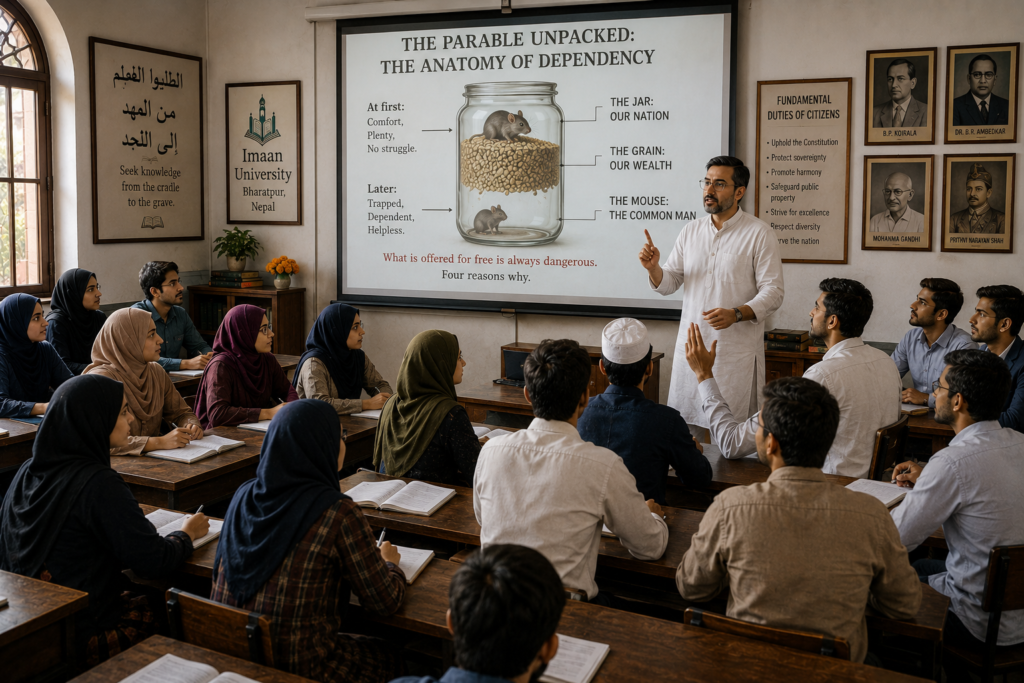
चार सबक: आत्मनिर्भरता का दर्शन
वह श्यामपट (ब्लैकबोर्ड) की ओर बढ़े, और चॉक की तेज़ खट-खट के साथ उन्होंने पाठ शुरू किया, जबकि अब्दुल्लाह और बाकी पूरी कक्षा ने पाठ पर पूरा ध्यान दिया।
“पहला सबक: अल्पकालिक (कम समय के) सुख, दीर्घकालिक (लंबे समय के) जाल बन सकते हैं।” चूहा इसलिए खुश था क्योंकि अनाज मुफ्त था। उसने कभी नहीं सोचा कि जब यह खत्म होगा तो क्या होगा। आराम, महत्वाकांक्षा को सुन्न कर देने वाली दवा है।
“दूसरा सबक: जब चीज़ें बहुत आसानी से मिलती हैं और आप आरामपसंद हो जाते हैं, तो आपको जीवित रहने की अवस्था (Survival Mode) में धकेला जा रहा होता है।” जीवित रहने की अवस्था, जीवन नहीं है। वह तो बस किसी और पर निर्भर रहकर, निष्क्रिय होकर, प्रतीक्षा करते रहना है।
“तीसरा सबक: जब आप अपने कौशल (Skills) का उपयोग करना बंद कर देते हैं, तो आप केवल कौशल नहीं खोते। आप अपनी विकल्प (CHOICES) खो देते हैं।” चूहे के पास पैर थे। वह दौड़ सकता था, चढ़ सकता था, खोज सकता था। लेकिन वे क्षमताएँ धीरे-धीरे क्षीण हो गईं। कौशल मांसपेशियों की तरह हैं। इस्तेमाल करो, वरना खो दोगे। और कौशल के बिना, इंसान अपनी सबसे कीमती संपत्ति खो देता है: अपने रास्ते को चुनने की शक्ति।
“चौथा सबक: सही समय पर सही कदम उठाया जाना चाहिए, अन्यथा आप सब कुछ खो देते हैं।” चूहे को कुछ अनाज खाकर बाहर निकल जाना चाहिए था, जबकि जार उसे छलांग लगाने के लिए पर्याप्त आधार (Platform) दे रहा था। उसने इंतज़ार किया। अनाज खत्म हो गया। अवसर दूसरी बार दस्तक नहीं देता।
उन्होंने चॉक रख दिया। “जीवन में कुछ भी आसानी से नहीं मिलता। अगर कोई चीज़ आसानी से मिल रही है, तो हो सकता है वह रखने लायक ही न हो। इन चार बिंदुओं पर गहराई से सोचिए।”
सय्यदा ने हाथ उठाया। “तो चूहा सामान्य आदमी है। भरा हुआ जार (मर्तबान) हमारा राष्ट्र है। अनाज हमारी राजकोषीय संपत्ति है। और परिणाम ऐसे नागरिक हैं जो अकुशल और अपंग बन जाते हैं—मानसिक रूप से भी, शारीरिक रूप से भी।”
“बिल्कुल, सय्यदा। यही पूरा मुद्दा है।”
“बढ़िया कहा, प्रोफेसर। बिल्कुल सही!” इक़बाल ने कहा।
प्रोफेसर यासिर आगे झुक गए। “हमारा स्वतंत्र और निष्पक्ष चुनाव का अध्ययन एक चेतावनी से शुरू होता है: ‘मुफ्त के भोजन’ से घृणा कीजिए, क्योंकि उसके पीछे हमेशा कोई छिपी हुई कीमत होती है। राजनीतिक मैदान में यह कीमत एक ही शब्द में लिपटी होती है: मुफ़्तख़ोरी (फ्रीबीज़- मुफ्त की रेवड़ियाँ)। यह समझना ज़रूरी है कि ये खोखले वादे हमारे समाज की बुनियाद को कैसे कमजोर करते हैं।”
बड़ा अंतर: फ्रीबीज़ बनाम कल्याणकारी योजनाएँ
ज़ुबैर ने अपनी आवाज़ उठाई। “लेकिन प्रोफेसर, कल्याणकारी योजनाएँ (Welfare Schemes) भी तो जनता की मदद के लिए ही होती हैं, ठीक वैसे ही जैसे फ्रीबीज़। हम इन दोनों के बीच की अंतर-रेखा कहाँ खींचें?”
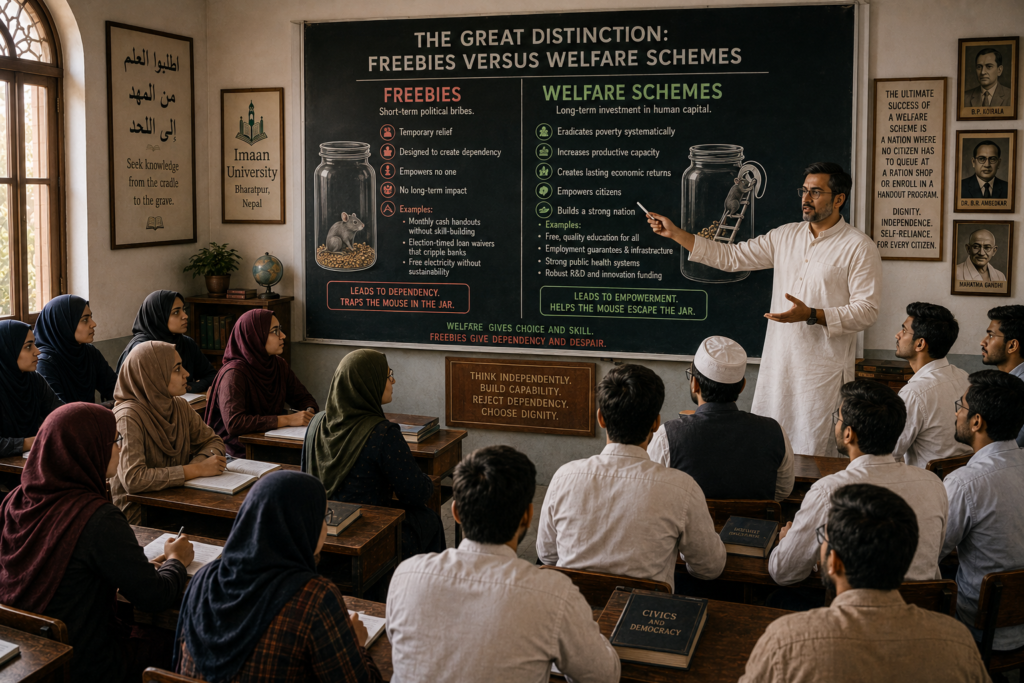
“बेहतरीन सवाल—बेहद महत्वपूर्ण।” उन्होंने बोर्ड के ठीक बीचों-बीच एक गहरी रेखा खींची, बाईं तरफ FREEBIES (मुफ्त की रेवड़ियाँ) और दाईं तरफ WELFARE SCHEMES (कल्याणकारी योजनाएँ) लिखा।
“फ्रीबीज़,” प्रोफेसर यासिर ने शुरुआत की, “अल्पकालिक राजनीतिक रिश्वत (Short-term Political Bribes) हैं। वे अस्थायी राहत तो देती हैं, लेकिन उन्हें जानबूझकर इस तरह तैयार किया जाता है कि वे लोगों को निर्भर बना दें। वे किसी को सशक्त नहीं बनातीं—न महिलाओं को, न किसानों को, और युवाओं को तो कतई नहीं, विशेषकर बेरोज़गार युवाओं को। उदाहरण के लिए, महीने में मिलने वाली वह नकद सहायता जिसके साथ कोई कौशल-निर्माण (skill-building) न जोड़ा गया हो, या चुनावों के समय घोषित होने वाली कर्ज माफी जो हमारी बैंकिंग व्यवस्था को अपंग बना देती है, या बिना किसी टिकाऊ योजना (sustainability plan) के मुफ्त दी जाने वाली बिजली।”
उन्होंने बोर्ड के दाईं ओर थपथपाया। “दूसरी ओर, कल्याणकारी योजनाएँ (Welfare Schemes) मानव पूंजी (Human Capital) में दीर्घकालिक निवेश हैं। उनका उद्देश्य हमारी उत्पादन क्षमता को बढ़ाकर और स्थायी आर्थिक लाभ पैदा करके व्यवस्थित रूप से गरीबी को जड़ से खत्म करना है। हम इसे सभी के लिए मुफ्त और गुणवत्तापूर्ण शिक्षा, महत्वपूर्ण बुनियादी ढांचे (इंफ्रास्ट्रक्चर) का निर्माण करने वाली रोजगार गारंटी, बेहतर ढंग से काम कर रही सार्वजनिक स्वास्थ्य प्रणालियों, और अनुसंधान व विकास (Research and Development) के लिए मिलने वाले मजबूत फंड के रूप में देख सकते हैं।”
वे कक्षा की ओर मुड़े। “यह उस चूहे की किस्मत को पूरी तरह दर्शाता है। कल्याणकारी योजनाएँ जार से बाहर निकलने का रास्ता दिखाती हैं—यह नागरिकों को विकल्प और कौशल देती हैं। जबकि फ्रीबीज़ (मुफ्तखोरी) आपको पूरी तरह से उस व्यक्ति पर निर्भर कर देती हैं जो अगली बार अनाज का दाना डालेगा—यह केवल पराधीनता (डिपेंडेंसी) पैदा करती है।”
“किसी भी कल्याणकारी योजना की अंतिम सफलता एक बेहद सुखद तस्वीर होती है: एक ऐसा राष्ट्र जहाँ किसी भी नागरिक को राशन की दुकान पर कतार में न खड़ा होना पड़े या किसी मुफ्त कार्यक्रम में अपना नाम न लिखाना पड़े। उच्च वर्ग पर विचार करें—वे लाइनों में इंतज़ार नहीं करते क्योंकि उनके पास पहले से ही शिक्षा, रोजगार और वित्त में पूर्ण सुरक्षा है। वही गरिमा और आत्मनिर्भरता हर नागरिक का लक्ष्य होना चाहिए।”
मछली पकड़ने की छड़ी और मछली: दो भविष्य की कहानी
जमाल ने अपना हाथ उठाया। “लेकिन प्रोफेसर, अगर एक गृहिणी को हर महीने 3,000 रुपये मिलते हैं, तो इसमें गलत क्या है? जनता का कर (Tax- टैक्स), जनता के पास ही तो वापस जा रहा है।”
प्रोफेसर यासिर ने उसे धैर्य भरी नज़र से देखा। “जमाल, तुम अभी भी कल्याणकारी योजनाओं (welfare) और मुफ्तखोरी (freebies) के बीच भ्रमित हो रहे हो। मैं इसे बिल्कुल स्पष्ट कर देता हूँ।”
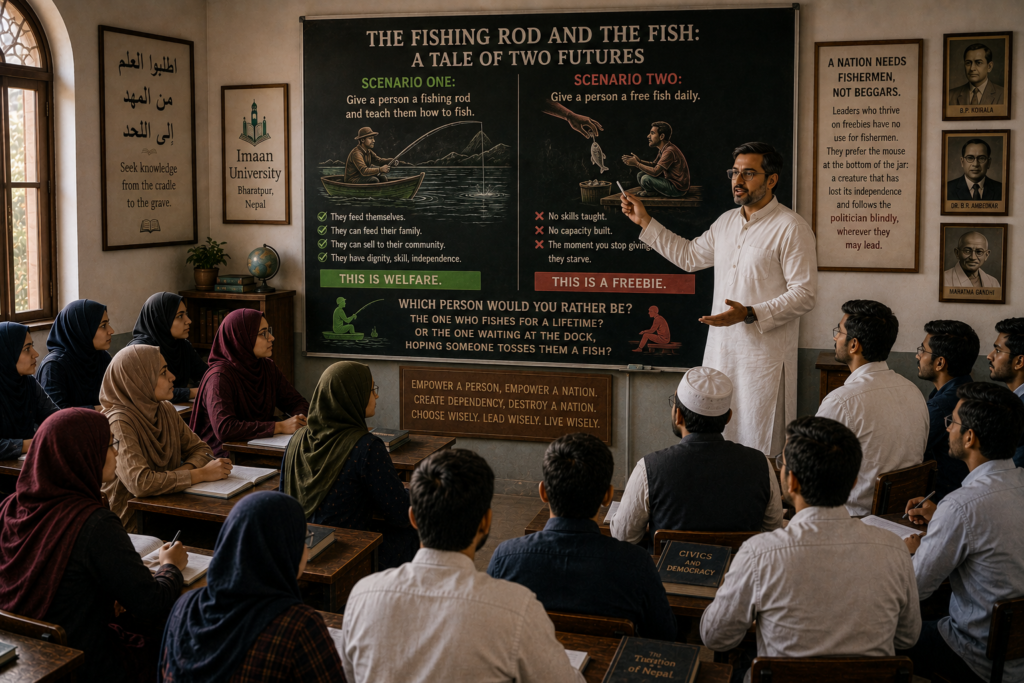
उन्होंने अपनी दो उंगलियां उठाईं। “पहली स्थिति (Scenario One): किसी व्यक्ति को मछली पकड़ने की छड़ी (fishing rod) दीजिए और उसे मछली पकड़ना सिखाएं। वह अपना, अपने परिवार का पेट भरेगा, शायद अपने समुदाय को मछली भी बेचेगा। उनके पास गरिमा, कौशल और स्वतंत्रता होती है। यह कल्याण है।”
उन्होंने एक उंगली नीचे कर ली। “दूसरा स्थिति (Scenario Two): किसी व्यक्ति को रोज़ाना एक मुफ्त मछली दीजिए। कोई कौशल नहीं सिखाया गया। कोई क्षमता विकसित नहीं की गई। जिस पल आप देना बंद कर देंगे, वह भूखा मर जाएगा। यह मुफ्तखोरी है।”
“आप कौन सा व्यक्ति बनना पसंद करेंगे? वह जो जीवन भर मछली पकड़ता है? या वह जो घाट पर इंतज़ार करता है, इस उम्मीद में कि कोई उसकी तरफ एक मछली फेंक दे?”
जमाल ने धीरे से सिर हिलाया। “वही, जिसके पास मछली पकड़ने की छड़ी है।”
“बिल्कुल सही। क्या एक समृद्ध राष्ट्र को कुशल मछुआरों की आवश्यकता होती है या ऐसे लोगों की जो बस अपनी गोद में मछली के गिरने का इंतज़ार करते हैं? मुफ्तखोरी पर पलने वाले नेताओं को मछुआरों की कोई आवश्यकता नहीं होती। वे मर्तबान (Jar) के तल में पड़े चूहे को पसंद करते हैं: एक ऐसा जीव जो अपनी स्वतंत्रता खो चुका है और अंधों की तरह नेता के पीछे चलता है, चाहे वह उसे जहाँ भी ले जाए।”
बचाव: गरीबी बनाम निर्भरता का जाल
पीछे की कतार से एक छात्र—जिसे जमाल पहचान नहीं पाया, शायद राजनीति विज्ञान (political science) विभाग से होगा—ज़ोर से बोल पड़ा: “तो, जो गरीब हैं और मदद स्वीकार करते हैं, वे आपके लिए बस चूहे हैं?”
पूरा कक्ष स्तब्ध रह गया।
प्रोफेसर यासिर ने अपने चश्मे उतारे और धीरे-धीरे, सधे हुए हाथों से उन्हें साफ करने लगे। “मैंने ऐसा नहीं कहा।”
“आपका इशारा उसी तरफ था,” छात्र ने चुनौती दी। “चूहा। मूषक। तिलचट्टा। आप उन लोगों की तुलना कीड़े-मकोड़ों (vermin) से कर रहे हैं जिनके पास कुछ भी नहीं है।”
जमाल का दिल उसकी पसलियों से टकराने लगा। उसे एहसास हुआ कि उसने अपने क़लम को इतनी ज़ोर से पकड़ रखा था कि उसका हाथ दर्द करने लगा था।
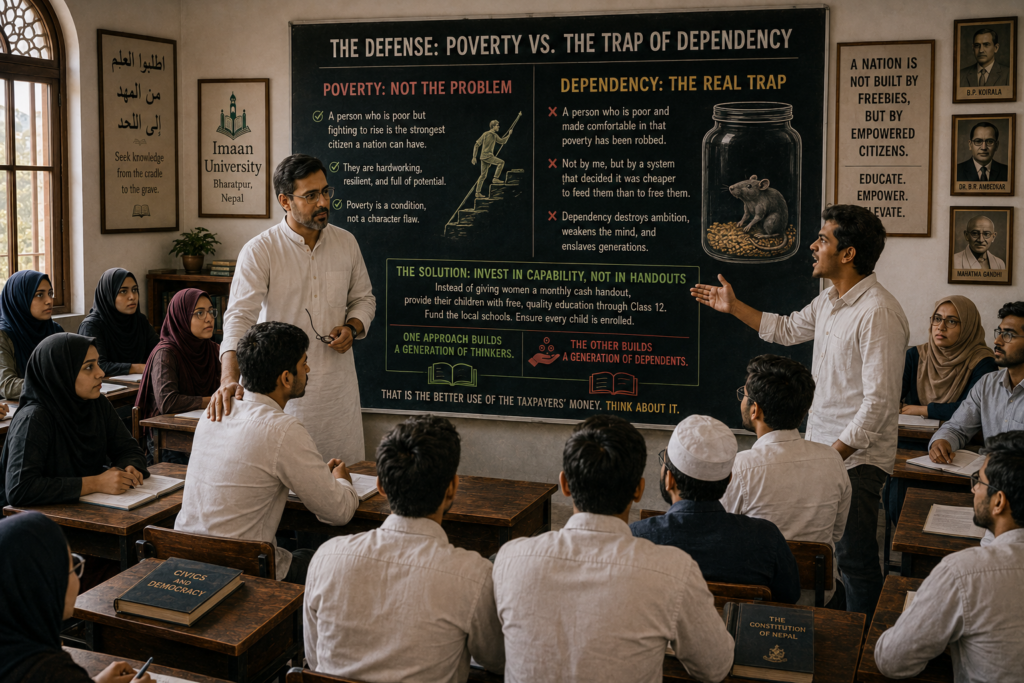
प्रोफेसर यासिर ने धीमे स्वर में कहा, “मैंने चूहे की तुलना गरीबी से नहीं, बल्कि निर्भरता (dependency) से की है। दोनों में बहुत बड़ा और बुनियादी फर्क है। एक व्यक्ति जो गरीब है लेकिन ऊपर उठने के लिए संघर्ष कर रहा है—वह व्यक्ति मानसिक और शारीरिक दोनों रूप से किसी भी राष्ट्र का सबसे मज़बूत नागरिक होता है। लेकिन एक ऐसा व्यक्ति जो गरीब है और उसे उसी गरीबी में ‘आरामदेह’ बना दिया गया है? उस व्यक्ति को लूटा गया है। मेरे द्वारा नहीं, बल्कि एक ऐसी प्रणाली (सिस्टम) द्वारा जिसने यह तय किया कि उन्हें आज़ाद करने की बजाय उन्हें मुफ्त का खाना खिलाना सस्ता पड़ेगा।”
वे जमाल के करीब आए और उसका कंधा थपथपाया। उनकी आवाज़ नरम होकर एक सलाहकार के लहजे में बदल गई। “महिलाओं को महीने में नकद सहायता देने के बजाय, कल्पना कीजिए कि उनके बच्चों को 12वीं कक्षा तक मुफ्त और गुणवत्तापूर्ण शिक्षा दी जाए। स्थानीय स्कूलों को धन मुहैया कराया जाए। सुनिश्चित करें कि हर बच्चा नामांकित हो। एक दृष्टिकोण विचारकों (thinkers) की पीढ़ी का निर्माण करता है; दूसरा आश्रितों (dependents) की पीढ़ी का निर्माण करता है। करदाताओं (taxpayers) के पैसे का बेहतर उपयोग यही है। इस पर सोचकर देखिए।”
मुफ़्तखोरी का भूगोल और मनोविज्ञान
सानिया ने पूछा, “क्या यह प्रवृत्ति सभी देशों के लिए समान रूप से नुकसानदायक है?”
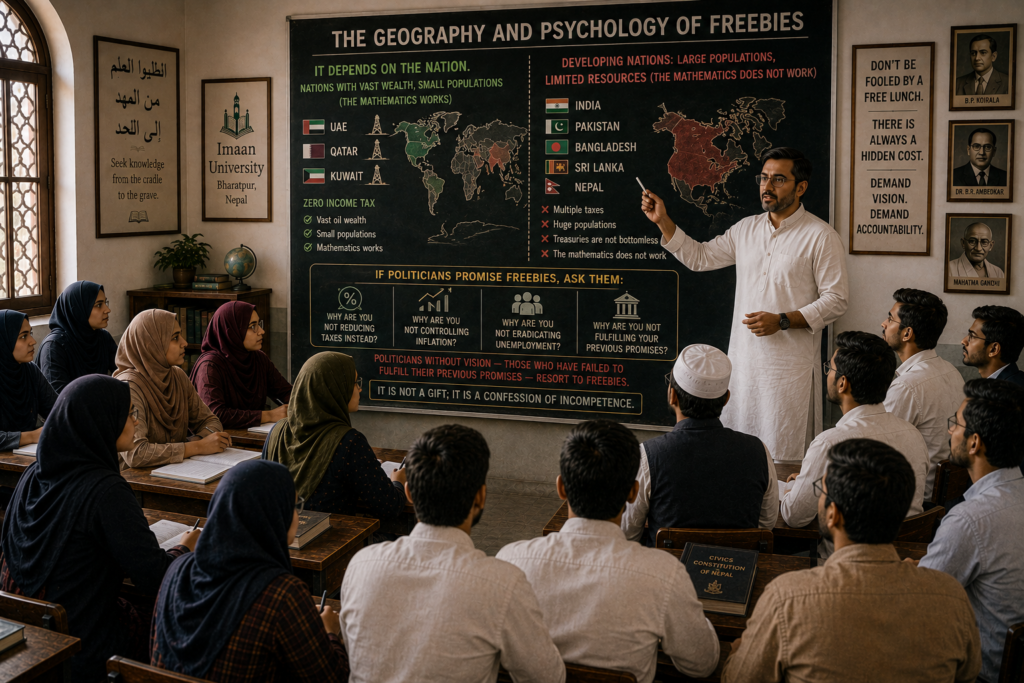
“यह देश पर निर्भर करता है,” प्रोफेसर यासिर ने उत्तर दिया। “संयुक्त अरब अमीरात (UAE), क़तर और कुवैत जैसे राष्ट्र शून्य आयकर (zero income tax) लगाते हैं, क्योंकि उनके पास अपार तेल संपदा है और जनसंख्या भी छोटी है। उनके लिए यह गणित काम करता है। लेकिन भारत, पाकिस्तान, बांग्लादेश, श्रीलंका और हमारा अपना नेपाल जैसे विकासशील देश? हम कई तरह के कर (Tax) वसूलते हैं, फिर भी हमारी खज़ाने की क्षमता असीम नहीं है, और हमारी जनसंख्या बहुत बड़ी है। हमारे लिए यह गणित बिल्कुल काम नहीं करता।”
वे आगे झुके, उनकी दृष्टि तीव्र थी। “अगर राजनेता मुफ़्तखोरी का वादा करें, तो उनसे यह पूछिए: आप कर (Tax) कम क्यों नहीं कर रहे? आप महँगाई पर नियंत्रण क्यों नहीं कर रहे? आप बेरोज़गारी क्यों नहीं मिटा रहे? जिन राजनेताओं के पास दृष्टि नहीं होती—जो अपने पिछले वादे पूरे नहीं कर पाए—वे मुफ़्तखोरी का सहारा लेते हैं। यह कोई उपहार नहीं है; यह अक्षमता (incompetence) की स्वीकारोक्ति है।”
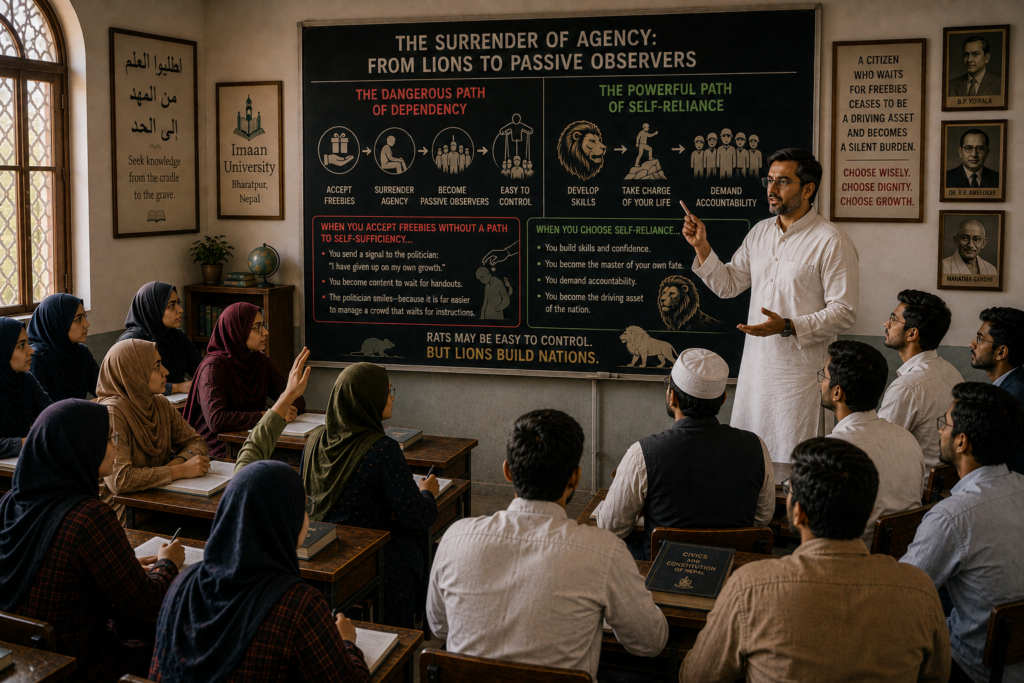
स्वतंत्रता का आत्मसमर्पण: शेरों से निष्क्रिय दर्शक तक
इरफान ने अपना हाथ उठाया। “लेकिन जो लोग ये मुफ्त की चीजें प्राप्त करते हैं, वे अक्सर इसे एक जीत के रूप में देखते हैं। वे उन राजनेताओं की प्रशंसा करते हैं और उन्हें ही वोट देना जारी रखते हैं।”
प्रोफेसर यासिर के चेहरे पर गंभीरता छा गई। “जब कोई व्यक्ति मुफ्तखोरी पर निर्भर हो जाता है, तो वह अनजाने में अपनी स्वायत्तता (agency) को त्याग देता है। वह खुद को अपने भाग्य का मालिक समझना बंद कर देता है और अपनी ज़िंदगी का निष्क्रिय दर्शक बन जाता है। उसी क्षण, वह हमारे राष्ट्र की प्रेरक संपत्ति न रहकर उसका मूक बोझ (silent burdens) बन जाता है।”
“जब आप आत्मनिर्भरता के मार्ग के बिना कोई मुफ्त की चीज़ स्वीकार करते हैं,” प्रोफेसर यासिर ने अपनी बात जारी रखी, “तो आप राजनेता को एक संकेत भेजते हैं: ‘मैंने अपने विकास की उम्मीद छोड़ दी है। मैं आपकी खैरात (handouts) का इंतज़ार करके संतुष्ट हूँ।’ और राजनेता मुस्कुराता है—क्योंकि जवाबदेही (accountability) की मांग करने वाले नागरिकों की तुलना में निर्देशों का इंतज़ार करने वाली भीड़ को नियंत्रित करना कहीं अधिक आसान होता है।”
मकसूद बीच में ही बोल पड़ा, उसकी आवाज़ हवा को चीरती हुई निकली। “तो, आप जो कह रहे हैं उसका मतलब है कि शेरों की तुलना में चूहों को नियंत्रित करना कहीं ज़्यादा आसान है।”
प्रोफेसर ने कुछ नहीं कहा। कमरे में सुई गिरने जैसी (pin-drop) शांति छा गई, जो भारी और किसी उत्तर की प्रतीक्षा से भरी थी।
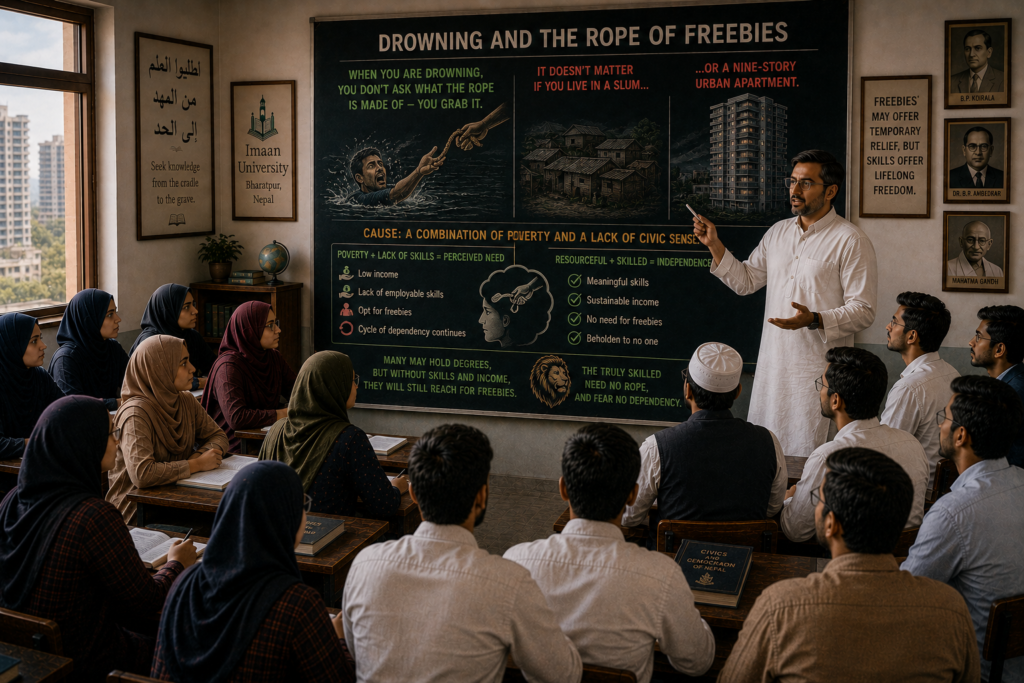
डूबता आदमी और मुफ़्तखोरी की रस्सी
एक लंबी, असहज ख़ामोशी के बाद, खिड़की के पास बैठे एक छात्र ने चुप्पी तोड़ी। “लेकिन प्रोफ़ेसर, ऐसा सिर्फ़ संघर्ष करने वाले लोग ही नहीं करते। मैंने नौ-मंज़िला शहरी इमारतों में रहने वाले लोगों को भी—जिनके पास साधन हैं—मुफ़्त सुविधाओं में नाम दर्ज कराते देखा है। आप इसे कैसे समझाएँगे?”
“देखो, विद्यार्थियों,” प्रोफ़ेसर ने कहा, “जब आप डूब रहे होते हैं, तो आप यह नहीं पूछते कि रस्सी किस चीज़ की बनी है। आप बस उसे पकड़ लेते हैं—चाहे आप झुग्गी में रहते हों या नौ-मंज़िला शहरी इमारत में। हमें इस बुनियादी मानवीय प्रवृत्ति को स्वीकार करना होगा।”
उन्होंने एक पल रुककर अपनी मेज़ पर रखी पाठ्यपुस्तक पलटी और फिर ऊपर देखा। “लेकिन, पाठ्यक्रम (curriculum) की दृष्टि से कहें तो — और यही आपको परीक्षा में उत्तर देना होगा यदि यह प्रश्न आए — इसका कारण ग़रीबी और नागरिक-चेतना (civic sense) की कमी का संयोजन है।”
“यद्यपि कई लोगों के पास डिग्रियां होती हैं, लेकिन नगण्य आय वाले लोग—चाहे बेरोज़गारी के कारण हो, मंदी के बीच डूबते व्यवसायों के कारण, या फिर खराब ढंग से लागू की गई आर्थिक नीतियों के कारण—अक्सर कथित आवश्यकता के चलते सरकारी मुफ्त सुविधाओं (freebies) का रुख करते हैं, विशेष रूप से तब जब उनके पास वैकल्पिक रोज़गार-योग्य कौशल (employable skills) की कमी हो। आप शायद ही कभी वास्तविक रूप से साधन-संपन्न या कुशल नागरिकों को ऐसी योजनाओं के लिए आवेदन करते हुए पाएंगे; उन्हें बस इनकी कोई आवश्यकता ही नहीं होती। चूँकि उनके पास स्वयं की देखभाल के पर्याप्त साधन होते हैं, इसलिए वे स्वतंत्र रहते हैं और किसी के भी मोहताज नहीं होते।”
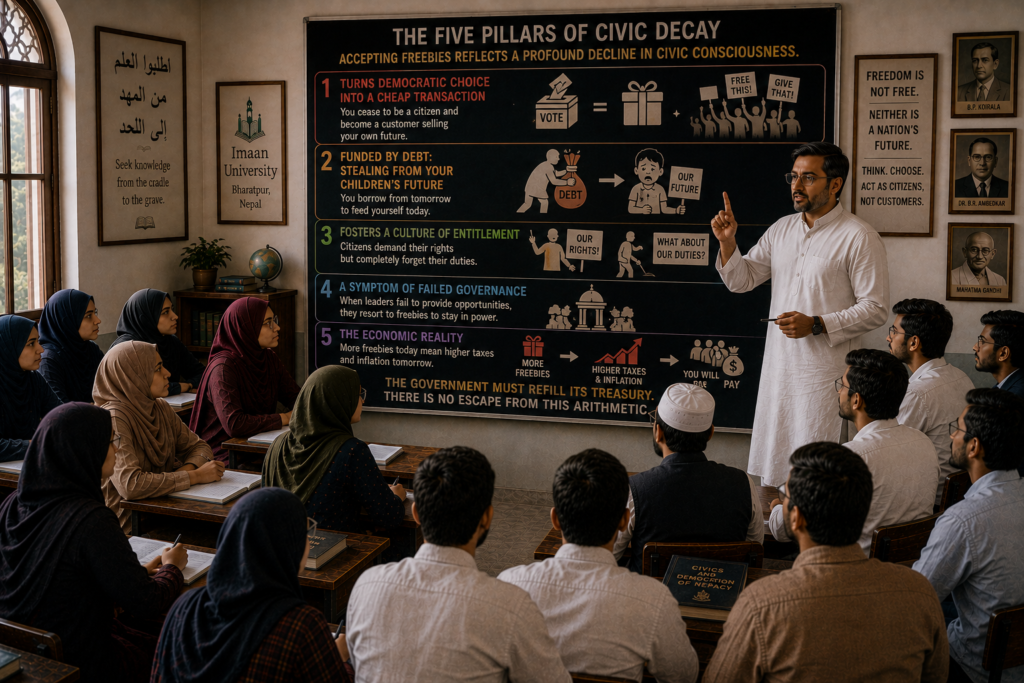
नागरिक पतन के पाँच स्तंभ
उन्होंने अपनी एक उंगली उठाई, जो इस बात का संकेत थी कि पाठ्यपुस्तक से अभी और भी बहुत कुछ सीखना बाकी है। “मुफ्त सुविधाओं को स्वीकार करना नागरिक चेतना में आई भारी गिरावट को दर्शाता है, और पाठ्यपुस्तक इसके पाँच महत्वपूर्ण कारणों को रेखांकित करती है।”
“पहला: यह लोकतांत्रिक चुनाव को एक सस्ते सौदे में बदल देता है—आप एक नागरिक नहीं रह जाते, बल्कि एक ऐसे ग्राहक बन जाते हैं जो अपना भविष्य बेच रहा होता है।”
“दूसरा: चूँकि, ये योजनाएं अक्सर कर्ज (debt) के पैसों से चलाई जाती हैं, इसलिए आप वास्तव में प्रभावी रूप से अपने बच्चों के भविष्य से चुराकर आज ख़ुद को खिला रहे होते हैं।”
“तीसरा: यह हक जताने (entitlement) की ऐसी संस्कृति को बढ़ावा देता है, जहाँ नागरिक अपने अधिकारों की मांग तो करते हैं, लेकिन अपने कर्तव्यों को पूरी तरह भूल जाते हैं।”
“चौथा:” उन्होंने जारी रखा, “यह विफल शासन (failed governance) का एक ज्वलंत लक्षण है।”
“और पाँचवाँ—अर्थशास्त्र की एक सरल सच्चाई: आज जितनी ज़्यादा मुफ्त की सुविधाएँ (मुफ्त की रेवड़ियाँ ) होंगी, कल उतने ही अधिक कर (taxes) और महंगाई (inflation) का सामना करना पड़ेगा। सरकार को अंततः अपना खजाना फिर से भरना ही होगा, और इसकी कीमत आप ही चुकाएंगे। इस गणित से बचने का कोई रास्ता नहीं है।”
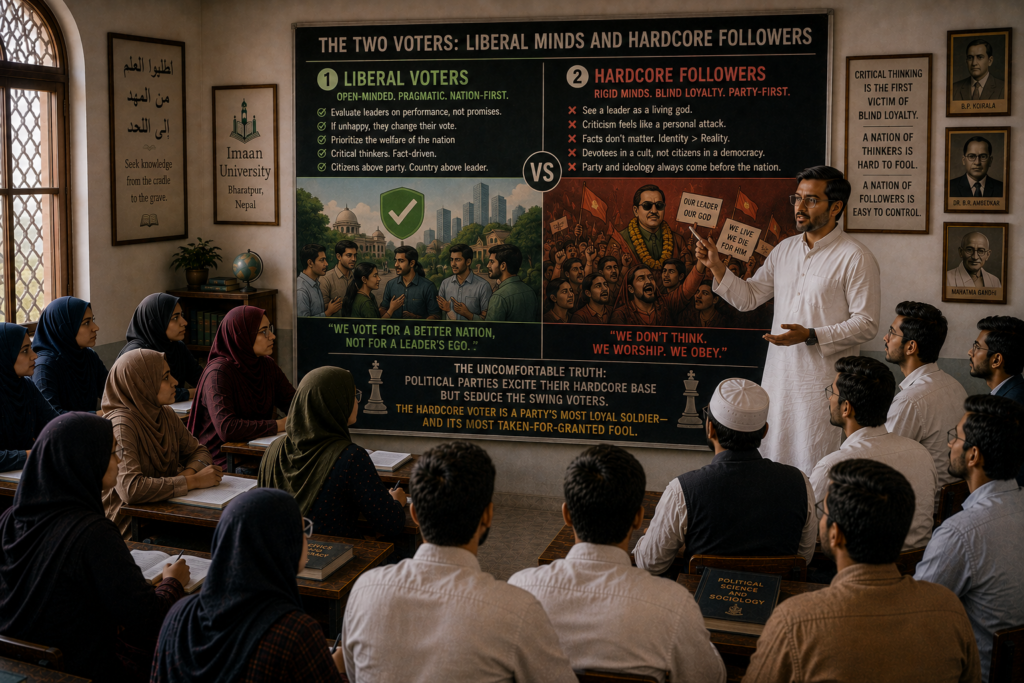
दो प्रकार के मतदाता: उदारवादी सोच बनाम कट्टर समर्थक
इब्राहिम ने अपना हाथ उठाया। “प्रोफेसर, मेरे चाचा एक ऐसे नेता के बहुत बड़े अंधभक्त हैं जो मुफ्त की रेवड़ियाँ बाँटता है। यहाँ तक कि जब वह नेता गैर-कानूनी काम करते हुए पकड़ा भी जाता है, तब भी मेरे चाचा उसे पूरी तरह अनदेखा कर देते हैं। जब बात उस नेता की आती है, तो उनकी तार्किक सोच बिल्कुल शून्य हो जाती है।”
प्रोफेसर यासिर के चेहरे पर एक संकोच भरी, थकी हुई मुस्कान आई। “इब्राहिम, ऐसी सच्चाई का गवाह बनना वाकई एक मुश्किल अनुभव है। लेकिन तुमने लोकतंत्र की सबसे खतरनाक घटनाओं में से एक को पहचान लिया है। राजनीति विज्ञान और समाजशास्त्र की भाषा में, हम इसे क्लाइंटेलिज़्म (संरक्षक-क्लाइंट संबंध) कहते हैं—एक ऐसी व्यवस्था जहाँ भौतिक लाभ या मुफ्त की सुविधाओं के बदले में एक ऐसी अंधी राजनीतिक वफादारी का सौदा किया जाता है, जो तार्किक सोच और कानून के शासन, दोनों पर पानी फेर देती है।”
“अगर मोटे तौर पर देखा जाए, तो मतदाता दो प्रकार के होते हैं। पहले होते हैं उदारवादी मतदाता (liberal voters)। ये खुले दिमाग वाले और व्यावहारिक होते हैं। वे किसी नेता का मूल्यांकन उसके वादों के आधार पर नहीं, बल्कि उसके काम के आधार पर करते हैं। यदि वे असंतुष्ट होते हैं, तो अपना वोट किसी और को दे देते हैं। वे किसी भी राजनेता के अहंकार से ऊपर उठकर राष्ट्र के कल्याण को प्राथमिकता देते हैं।”
“इसके बाद,” उन्होंने अपना लहजा बदलते हुए जारी रखा, “आते हैं कट्टर मतदाता (hardcore voters)। ये वे लोग हैं जिनकी सोच पूरी तरह से जड़ और संकीर्ण हो चुकी है। वे किसी नेता को एक जन-प्रतिनिधि के रूप में नहीं देखते, बल्कि उन्हें साक्षात भगवान मानने लगते हैं। यदि आप उनके नेता की आलोचना करते हैं, तो वे ऐसे भड़कते हैं मानो आपने उनके माता-पिता को अपशब्द कहे हों। उनके लिए तथ्य बेमायने हो जाते हैं क्योंकि उनकी अपनी पहचान उस राजनीतिक दल और उसकी विचारधारा के साथ पूरी तरह जुड़ चुकी होती है। वे अब विकल्प चुनने वाले नागरिक नहीं रह जाते—वे किसी पंथ (cult) के अंधभक्त बन जाते हैं। और इन भक्तों के लिए, उनका राजनीतिक दल और उसके हित हमेशा देश से ऊपर आते हैं।”
वे कुछ पल के लिए रुके, ताकि उनकी बात की गंभीरता को महसूस किया जा सके। “और यहाँ एक कड़वा सच यह भी है: राजनीतिक दल अपनी पूरी ताकत अपने कट्टर समर्थकों को उकसाने में लगाते हैं, जबकि बहुत शांति से उन मतदाताओं (swing voters) को रिझाते हैं जो किसी भी तरफ जा सकते हैं। एक कट्टर मतदाता किसी भी पार्टी का सबसे वफादार सिपाही होता है—और साथ ही, उस पार्टी द्वारा सबसे ज़्यादा बेवक़ूफ़ बनाया जाने वाला मूर्ख भी होता है।”
सिनेमाई खाका: नियंत्रण के लिए एक खलनायक की रणनीति
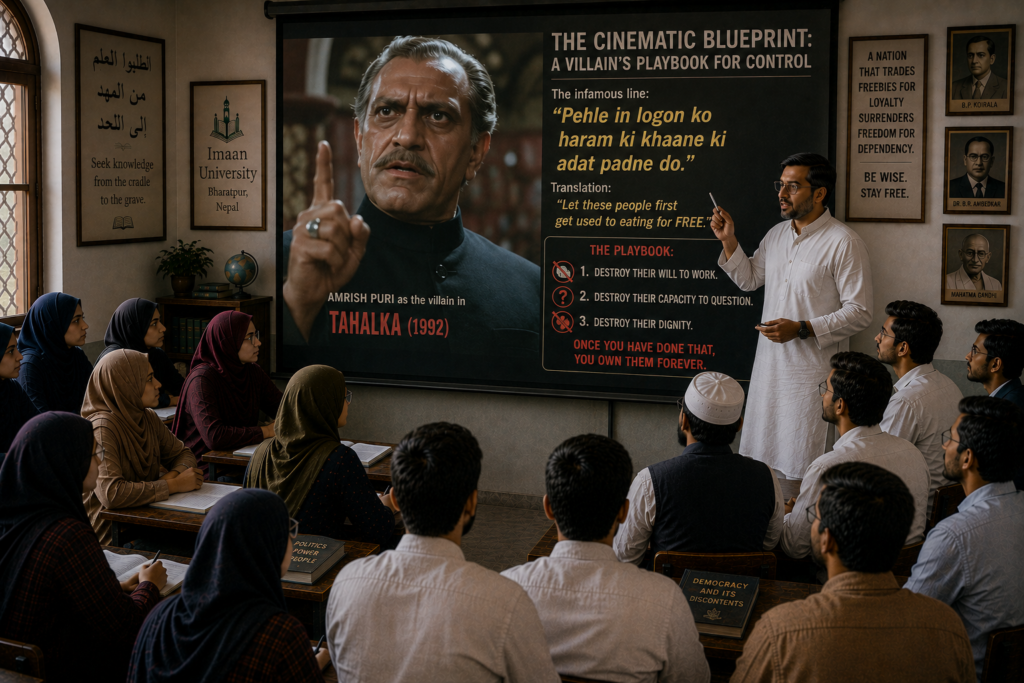
प्रोफेसर यासिर प्रोजेक्टर की तरफ मुड़े। “मैं आपको सिनेमा का एक ऐसा अंश दिखाना चाहता हूँ जिसने दशकों पहले ही इस त्रासदी को भाँप लिया था।”
1992 की फिल्म ‘तहलका’ की एक दृश्य स्क्रीन पर टिमटिमाते हुए चलने लगी। महान अभिनेता अमरीश पुरी पर्दे पर दिखाई दिए, और उनकी गूंजती हुई आवाज़ में वह कुख्यात संवाद (डायलॉग) गूंजा: “पहले इन लोगों को हराम की खाने की आदत पड़ने दो।”
प्रोफेसर यासिर ने वीडियो को रोक दिया, स्क्रीन पर खलनायक का चेहरा स्थिर (freeze) हो गया था। “इसका अनुवाद बिल्कुल सरल है: ‘इन लोगों को पहले मुफ्त में खाने की आदत लग जाने दो।’
“यही पूरी रणनीति (playbook) है,” प्रोफेसर ने अपनी आवाज़ को धीमा करते हुए फुसफुसाहट के लहजे में कहा। “जनता की काम करने की इच्छाशक्ति को नष्ट कर दो। सवाल पूछने की मतदाता की क्षमता को खत्म कर दो। नागरिक की गरिमा को कुचल दो। एक बार जब आप यह कर लेते हैं, तो आप हमेशा के लिए उनके मालिक बन जाते हैं।”
भविष्यद्रष्टा की चेतावनी और बाहर निकलने का रास्ता
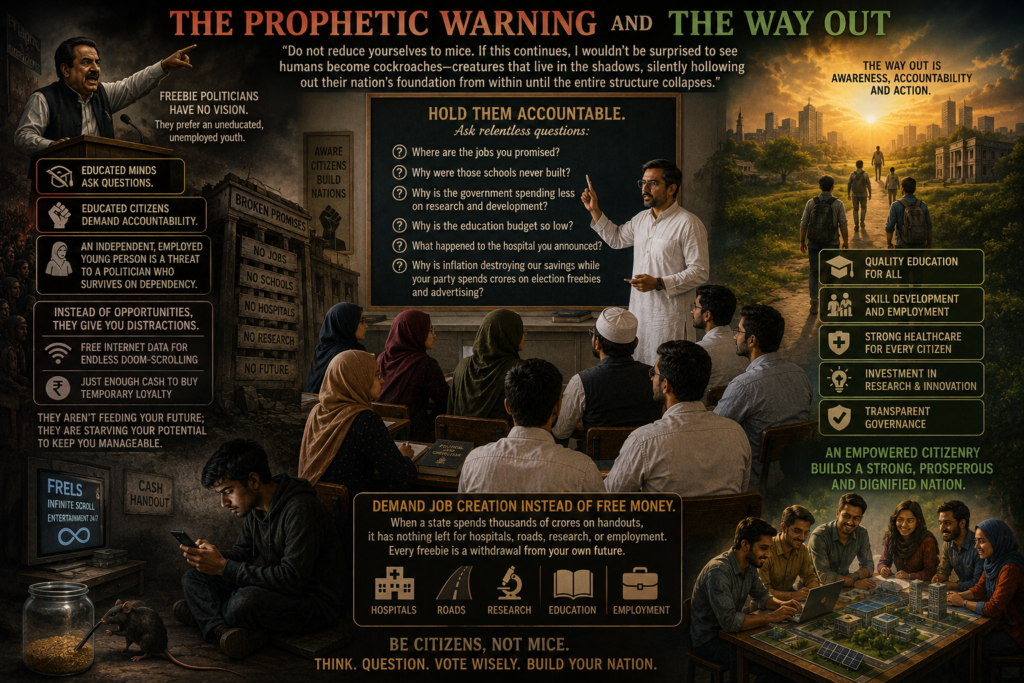
“यही कारण है कि मुफ्त की रेवड़ियाँ (freebies) बाँटने वाले इन राजनेताओं के पास कोई वास्तविक दूरदर्शिता नहीं होती,” उन्होंने कमरे के सामने टहलते हुए अपनी बात जारी रखी। “वे वास्तव में ऐसे युवाओं को पसंद करते हैं जो अशिक्षित और बेरोज़गार हों। क्यों? क्योंकि शिक्षित मस्तिष्क सवाल पूछता है। शिक्षित नागरिक जवाबदेही मांगता है। एक स्वतंत्र, शिक्षित, और रोज़गार-युक्त युवा उस राजनेता के लिए सीधा ख़तरा होता है जो केवल निर्भरता (dependency) की ऑक्सीजन पर ज़िंदा है।”
“इसलिए, आपको अवसर देने के बजाय, वे आपका ध्यान भटकाने वाली चीज़ें देते हैं,” प्रोफेसर यासिर ने कहा। “वे युवाओं को सोच समझ कर लगातार अंतहीन व्यर्थ सोशल मीडिया स्क्रॉलिंग (doom-scrolling) करने के लिए मुफ्त इंटरनेट डेटा देकर उलझाए रखते हैं, और उनकी अस्थायी वफादारी खरीदने के लिए बस उतना ही पैसा देते हैं जितने में काम चल जाए। वे आपके भविष्य का पोषण नहीं कर रहे हैं; वे आपको नियंत्रण में रखने के लिए आपकी क्षमताओं का गला घोंट रहे हैं।”
एक छात्र की तीखी और लगभग घबराई हुई आवाज़ सन्नाटे को चीरते हुए आई। “इस सड़ी हुई अवस्था से बाहर निकलने का रास्ता क्या है, प्रोफेसर?”
प्रोफेसर यासिर बिना किसी हिचकिचाहट के बोले। “उन्हें जवाबदेह ठहराओ। उनसे बिना थके लगातार सवाल पूछो: आपने जिन नौकरियों का वादा किया था, वे कहाँ हैं? वे स्कूल क्यों कभी बने ही नहीं? सरकार अनुसंधान और विकास (research and development) पर कम ख़र्च क्यों कर रही है? शिक्षा का बजट इतना कम क्यों है? जिस अस्पताल की आपने घोषणा की थी, उसका क्या हुआ? महंगाई हमारी बचत को क्यों खत्म कर रही है, जबकि आपकी पार्टी हमारे खून-पसीने की कमाई (टैक्स के पैसे) से चुनावी मुफ्त उपहारों और विज्ञापनों पर करोड़ों खर्च कर रही है?”
“मुफ्त पैसे के बजाय रोज़गार के अवसरों के सृजन की मांग करो,” प्रोफेसर यासिर ने आग्रह किया। “जब कोई राज्य मुफ्त की रेवड़ियाँ बाँटने में हज़ारों करोड़ रुपये खर्च कर देता है, तो उसके पास अस्पतालों, सड़कों, शोध या रोज़गार के लिए कुछ नहीं बचता। हर मुफ्त की चीज़ (फ्रीबी) आपके अपने भविष्य से निकाली गई एक रकम (withdrawal) है।”
“खुद को चूहों के स्तर पर मत गिराओ,” उन्होंने अपनी बात समाप्त की, उनकी आवाज़ उस शांत हॉल में गूंज रही थी। “यदि यही सिलसिला चलता रहा, तो मुझे इंसानों को तिलचट्टा (कॉकरोच) बनते देखकर कोई आश्चर्य नहीं होगा—ऐसे जीव जो अंधेरे में रहते हैं, और अंदर ही अंदर अपने राष्ट्र की नींव को तब तक चुपचाप खोखला करते रहते हैं जब तक कि पूरा ढांचा ढह न जाए।”
स्वतंत्रता का चुनाव मुफ़्तख़ोरी पर: न मैं कभी बिका, न कभी बेचा गया
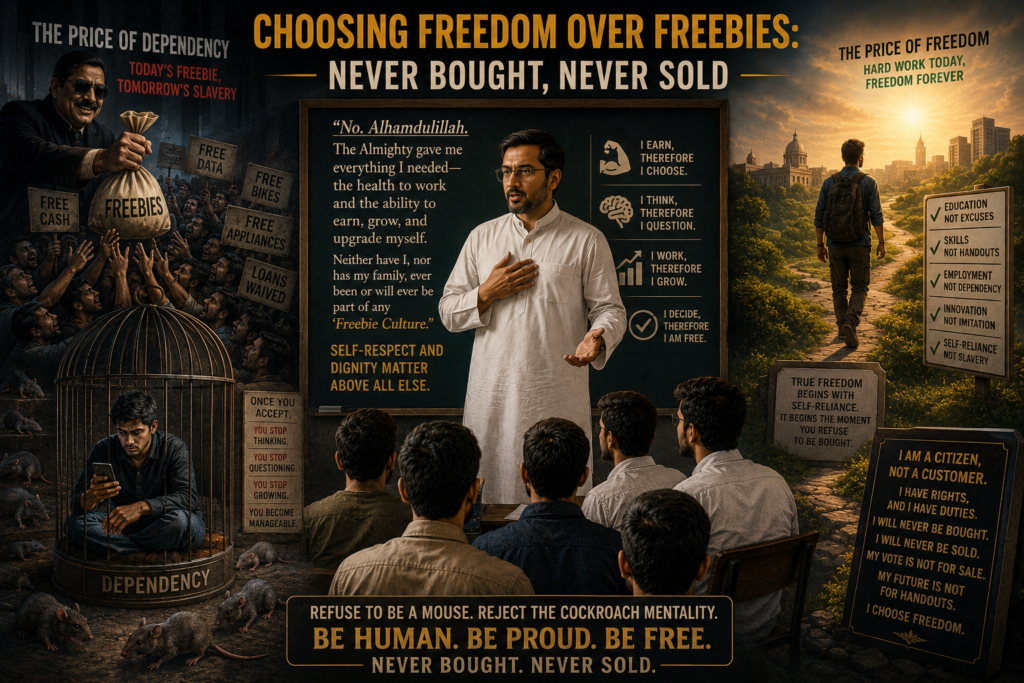
इब्राहिम आगे की ओर झुका, उसकी आवाज़ एक झिझक भरी फुसफुसाहट में बदल गई। “वैसे, क्या आपने कभी उन्हें लिया है? ये मुफ़्त की चीज़ें? मेरा मतलब है… मुफ़्त, कीमत के लिहाज़ से एक बहुत अच्छा सौदा है।”
प्रोफेसर यासिर सीधे खड़े हो गए, और उनके व्यक्तित्व में एक शांत, अडिग गर्व झलक रहा था। “नहीं। अल्हम्दुलिल्लाह (अल्लाह का शुक्र है)। अल्लाह तआला ने मुझे वह सब दिया जिसकी मुझे ज़रूरत थी—काम करने की सेहत, और कमाने, आगे बढ़ने और खुद को बेहतर (upgrade) बनाने की क्षमता। न मैंने, न मेरे परिवार ने कभी किसी ‘मुफ़्तखोरी की संस्कृति’ (Freebie Culture) का हिस्सा बने हैं, और न कभी बनेंगे।”
“आत्मसम्मान और गरिमा सबसे ऊपर है,” उन्होंने आगे कहा। “मैं एक इंसान से चूहे में, और निश्चित रूप से कॉकरोच में बदलने से इनकार करता हूँ। सच्ची स्वतंत्रता आत्मनिर्भरता से शुरू होती है। यह उसी क्षण शुरू होती है जब आप कुछ पैसों के लिए बिकने से इनकार कर देते हैं।”
युवा नेतृत्व और जवाबदेही का आह्वान
वे आगे की पंक्ति के करीब आए, उनकी आवाज़ में इस क्षण की पूरी गंभीरता झलक रही थी।
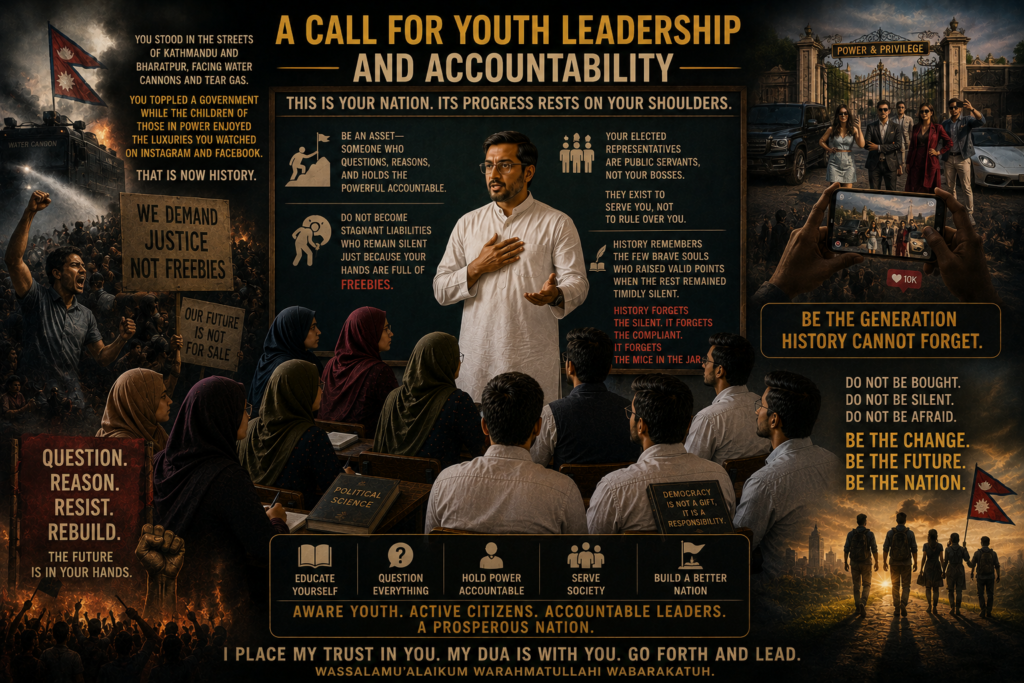
“मेरे प्यारे युवा छात्रों,” उन्होंने पूरे कमरे में नज़र दौड़ाते हुए कहना शुरू किया। “आप अभी-अभी एक ऐतिहासिक विरोध प्रदर्शन से बाहर निकले हैं। आप काठमांडू और भरतपुर की सड़कों पर डटे रहे, पानी की बौछारों (water cannons) और आंसू गैस का सामना किया। आपने एक सरकार को गिरा दिया, जबकि सत्ता में बैठे लोगों के बच्चे उन विलासिताओं का आनंद ले रहे थे जिन्हें आपने इंस्टाग्राम और फेसबुक पर देखा था। वह अब इतिहास है।”
“लेकिन याद रखें: यह आपका राष्ट्र है। इसकी प्रगति आपके युवा कंधों पर टिकी है। इसे निराश मत होने दें। एक संपत्ति (asset) बनें—ऐसा व्यक्ति जो सवाल करता है, तर्क करता है, और सत्ता में बैठे लोगों को जवाबदेह ठहराता है। ऐसे निष्क्रिय बोझ (stagnant liabilities) न बनें जो सिर्फ इसलिए चुप रहते हैं क्योंकि उनके हाथ मुफ्त की रेवड़ियों से भरे हुए हैं।”
“आपके चुने हुए प्रतिनिधि जनता के सेवक (public servants) हैं, आपके मालिक नहीं,” उन्होंने अपनी आवाज़ को तेज़ करते हुए कहा। “वे आपकी सेवा करने के लिए हैं, आप पर शासन करने के लिए नहीं। यह कभी मत भूलना।”
“इतिहास केवल उन चंद बहादुर लोगों को याद रखता है जिन्होंने तब जायज़ सवाल उठाए जब बाकी लोग डरकर चुप बैठे थे,” उन्होंने अपनी आवाज़ को उग्र और कोमल दोनों भावों में ढालते हुए अपनी बात जारी रखी। “इतिहास चुप रहने वालों को भूल जाता है। यह हर बात मान लेने वालों (compliant) को भूल जाता है। यह मर्तबान (Jar) में बंद चूहों को भूल जाता है।”
“वह पीढ़ी बनें जिसे इतिहास कभी भुला न सके।”
उन्होंने सम्मान के अंतिम भाव के रूप में अपना हाथ अपने सीने पर रखा।
“वस्सलामु अलैकुम व रहमतुल्लाही व बरकातुहू (और आप पर भी अल्लाह की सलामती, रहमत (दया) और उसकी बरकतें (आशीर्वाद) हों)।”
मेहराबदार खिड़कियों के बाहर, हिमालय का आसमान सुनहरा हो रहा था। हवा में गेंदे के फूल झूम रहे थे। मुअज्जिन ने प्राचीन शहर पर असर (Asr) की नमाज़ के लिए अज़ान देनी शुरू कर दी। और छात्र उठे—राहत की सांस लेते हुए नहीं, बल्कि उन लोगों की सुविचारित गति (deliberate movement) के साथ जिन्हें अभी-अभी कोई बड़ी ज़िम्मेदारी सौंपी गई हो।
आखिरकार, एक राष्ट्र सिर्फ एक जार नहीं है। यह वे हाथ भी हैं जो यह चुनते हैं कि अंदर फंसे रहना है—या चढ़कर बाहर निकलना है।
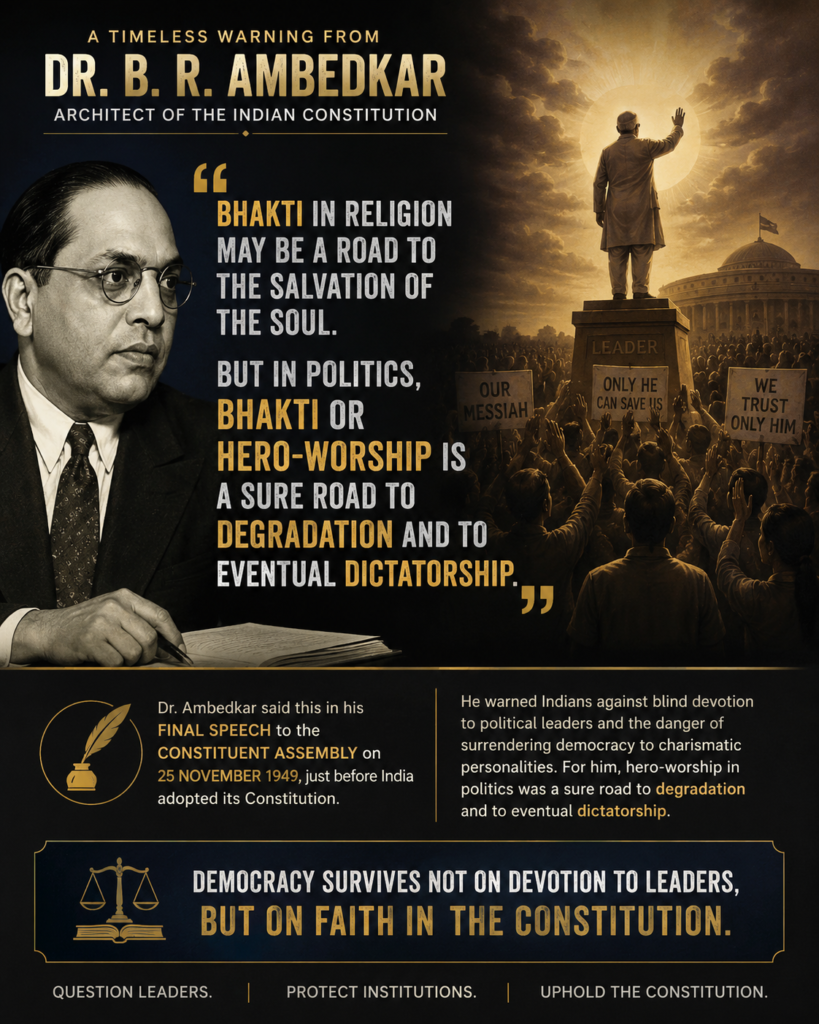
आप क्या सोचते हैं?
- क्या फ्रीबीज़ ज़रूरी सहायता हैं — या राजनीतिक जाल?
- क्या सरकारों को नकद खैरात (cash handouts) पर अधिक ध्यान देना चाहिए या दीर्घकालिक अवसरों पर?
- अगर नागरिक अपने नेताओं से सवाल करना बंद कर दें, तो क्या कोई लोकतंत्र जीवित रह सकता है?
- आपके लिए “जार में चूहा” किस बात का प्रतीक है?
संबंधित साहित्यिक कहानी पढ़ें:
“द माउस, द जार, एंड द नेशन”
- 14 Best Panchatantra ki Kahaniya-पंचतंत्र की सम्पूर्ण कहानियाँ
- 15 Best Children Stories in English from Panchatantra 2.0
- 16 amazing Aesop ki Kahaniya-ईसप की दंतकथाएँ
- 17 Best Aesop's Fables with moral lessons for children
- Arabian Nights
- Author's Best Written Stories in English
- Author's Best Written Stories हिंदी में-लेखक की सर्वश्रेष्ठ कहानियाँ
- Baital Pachisi बैताल पचीसी हिंदी में
- Bedtime Stories for All
- Hindi Love Stories-प्रेम और रोमांस की कहानियों
- Love and Romance
- Professor Yasser Ki Class: दास्तान-ए-यासिर
- Professor Yasser's Lectures
- Vikram and Betal series: Riddle Solving Stories
You can join my WhatsApp Channel by clicking the link here


