


For that Uncle who forwards everything without thinking or questioning.
(You know who you are)
The Message Before the Lecture
The muezzin’s call for Dhuhr prayer had long faded, replaced by the quiet, stifling hum of a Jakarta afternoon. On the sprawling green campus of Universitas Indonesia, the heat rose in shimmering waves from the pavement. Outside Lecture Hall C-201, students moved unhurriedly toward their faculties, their sandals whispering against the stone.
Inside, the air-conditioning offered a quiet, icy defense against the tropics. But at the podium, Professor Yasser felt a different kind of heat.
His smartphone vibrated against the wood of the lectern. He glanced down at the glowing screen. It was a message in his family WhatsApp group, sent by Abah—his father.
“You trust secular data over the faith of your own people. You educate the youth to be traitors. Shame.”
Beneath the text was a heavily doctored TikTok video claiming the country’s economic inflation was a hoax manufactured by foreign operatives. Professor Yasser stared at the screen for a fraction of a second. His jaw tightened. He didn’t reply. He simply powered the device down, slipped it into his pocket, and picked up a piece of chalk.
In sharp, violent strokes, he wrote two words on the blackboard: BLIND LOYALTY.
He turned to face the seventy students sitting in rapt attention. “Assalamu’alaikum warahmatullahi wabarakatuh.”
“Wa’alaikumussalam warahmatullahi wabarakatuh,” the class echoed.
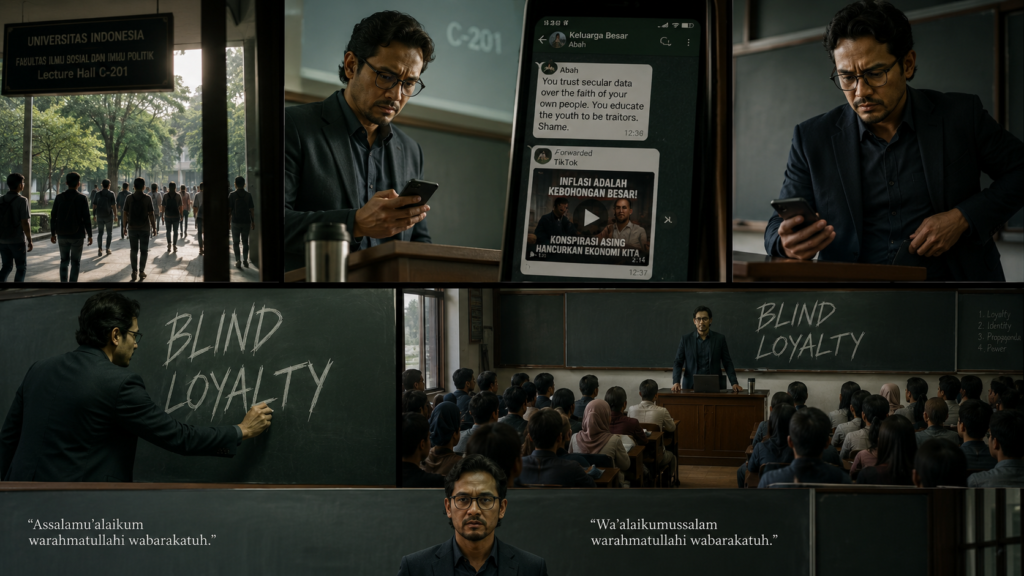
Voting Against the Stomach
“A simple question to start our afternoon,” Professor Yasser said, leaning his weight against the lectern. “Why do humans willingly vote against their own stomachs?”
The room shifted in silence. Professor Yasser paced slowly, his sharp, modern frames catching the fluorescent light.
“A few years ago, during a ground report from a state election in my ancestral homeland of India, a journalist interviewed a man from a deeply impoverished district. Ten years under the incumbent leader. Zero new roads. Zero schools. Zero jobs. The journalist asked, ‘Will you vote for the opposition candidate who is promising development?’“
Professor Yasser paused, locking eyes with a student in the front row. “The voter looked into the camera and said: ‘What will we do with jobs or education if we lose our mustache—our community’s pride? The current candidate belongs to my tribe; if he loses, then we lose. It doesn’t matter if he has done nothing for us.’
A murmur of disbelief rippled through the hall.
“Sir, with respect,” interrupted Faisal, a bespectacled political science major in the second row. “That is an extreme example from a highly polarized region. Indonesian voters are more pragmatic. We complain about the price of rice and cooking oil. We don’t vote for ‘mustaches’.”
Professor Yasser offered a tight, knowing smile. “Don’t we, Faisal? Let me ask you: how many of you have a family WhatsApp group that you have currently muted?”
A nervous chuckle swept the room. Half the hands in the hall went up, including Faisal’s.
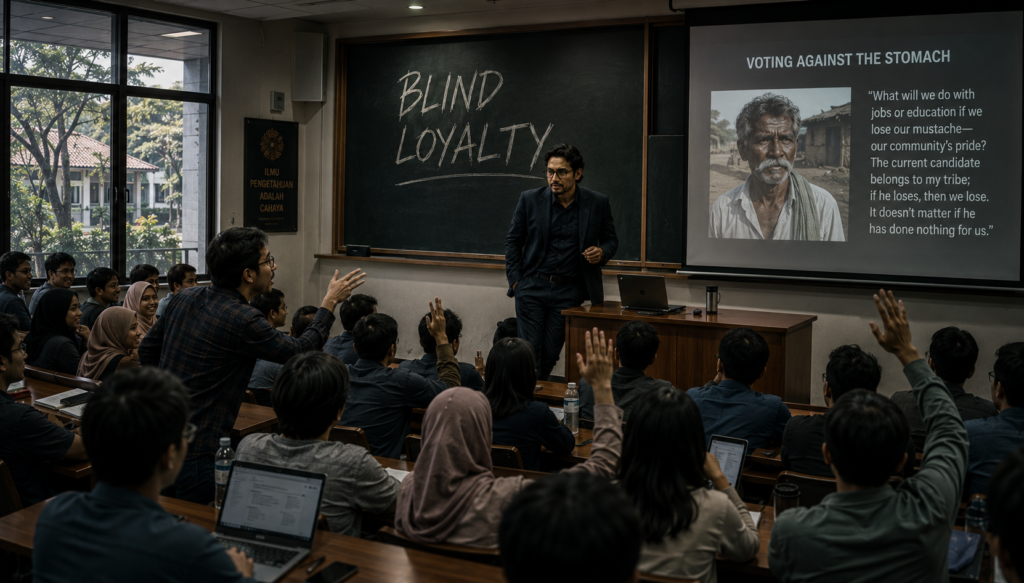
The Digital Assembly Line
“I live in a quiet perumahan in South Jakarta,” Professor Yasser continued, his voice crisp. “Our neighborhood group chat was created for security rounds and garbage collection. Today, it is a war room for what I call the ‘WhatsApp Uncles.’ Retired men who have entirely surrendered their autonomy to political dynasties.”
Dewi, a sharp-witted sociology student, raised her hand. “But Professor, isn’t that just standard confirmation bias? We all prefer news that aligns with our worldview. It doesn’t make them mindless.”
“If it were just passive bias, Dewi, I would agree with you,” Professor Yasser said, stepping away from the podium. “But it is not passive. It is an industrial-scale siege.”
He grabbed the chalk and drew a massive circle around the words “BLIND LOYALTY”.
“Last night, I watched a neighbor—a man whose family business collapsed due to the current administration’s import policies—share a fabricated article claiming the opposition was plotting to shut down local mosques. When I replied with a link to the actual legislative document proving it was a lie, he didn’t debate me. He didn’t read it. Within three minutes, five other uncles coordinated an attack. They called me a Western puppet. A hypocrite abandoning the ummah.“
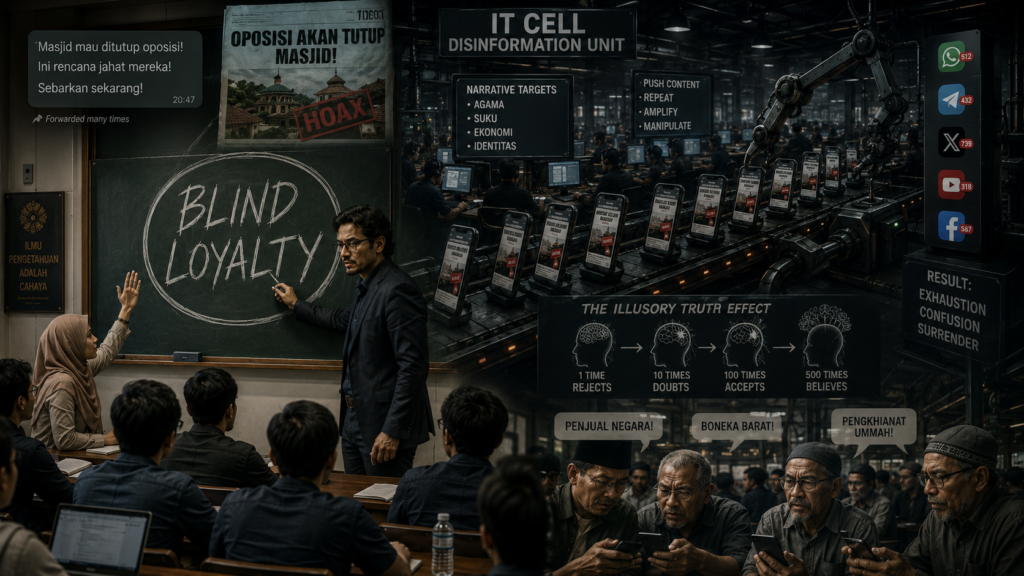
The Illusory Truth Effect: How Social Media Turns Repetition into Reality
Professor Yasser looked back at Dewi. “They are not unintelligent people, Dewi. But they are victims of the Illusory Truth Effect. In psychology, we know the brain struggles to separate familiarity from fact. But if an IT Cell of any political party floods X (Twitter), Telegram, WhatsApp groups, YouTube, and Facebook so that a brain hears that same lie five hundred times, it stops processing it as an anomaly. It processes sheer repetition as truth. It is a relentless machinery designed to exhaust your critical thinking until you just surrender.“
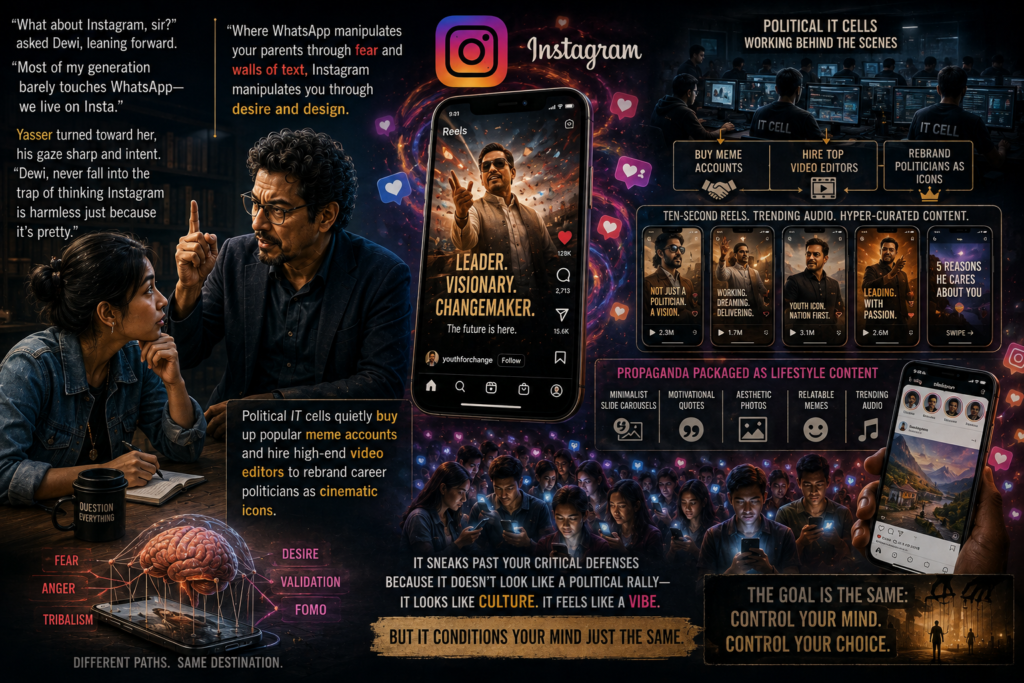
“What about Instagram, sir?” asked Dewi, leaning forward. “Most of my generation barely touches WhatsApp—we live on Insta.”
Professor Yasser turned toward her, his gaze sharp and intent. “Dewi, never fall into the trap of thinking Instagram is harmless just because it’s pretty. Where WhatsApp manipulates your parents through fear and walls of text, Instagram manipulates you through desire and design.
“Political IT cells quietly buy up popular meme accounts and hire high-end video editors to rebrand career politicians as cinematic icons or living gods. They flood your feed with ten-second Reels set to trending audio, hyper-curated photo ops, and sleek slide carousels that package raw propaganda as minimalist lifestyle content.”
“It sneaks past your critical defenses because it doesn’t look like a political rally—it looks like culture. It feels like a vibe. But it conditions your mind just the same.”
Echoes of History: How Hitler’s Nazi Propaganda Machine Tactics Mirror Modern Disinformation
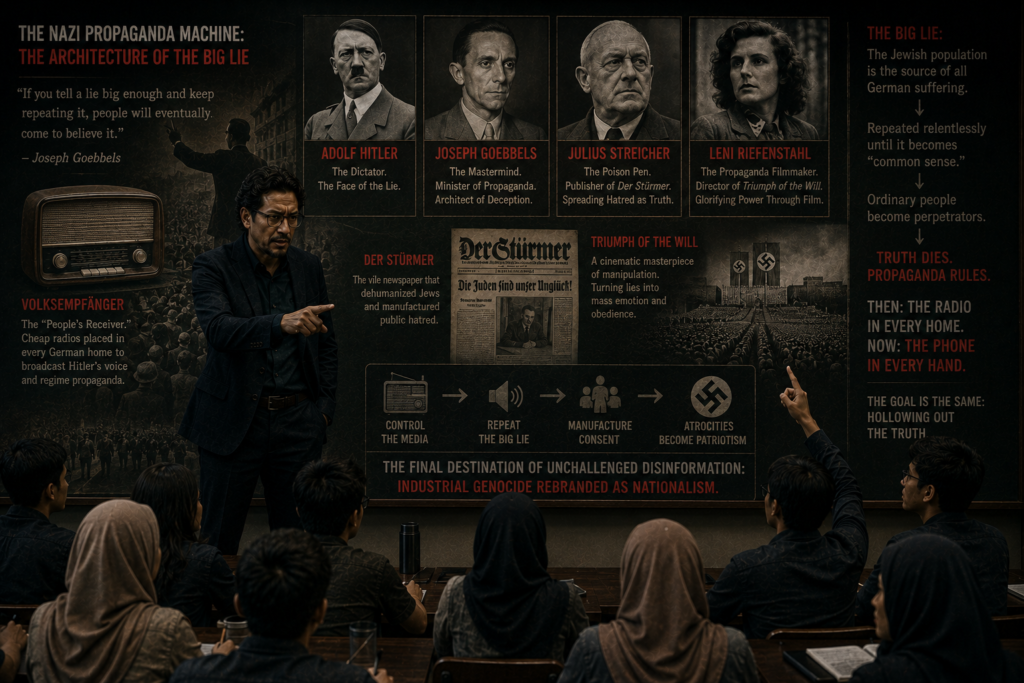
Near the back of the room, Rizky spoke up, his brow furrowed. “That architecture… controlling the media, repeating a massive lie until people think atrocities are patriotic. That’s exactly how Joseph Goebbels operated the Nazi propaganda machine.”
“Spot on, Rizky,” Professor Yasser said, pointing directly at him. “Under Goebbels, the Nazi regime weaponized a dark truth: if you control the media entirely, you control reality itself. They manufactured cheap radios—the Volksempfänger—to ensure Hitler’s voice echoed in every German kitchen. But it wasn’t a solo act; he built an intricate architecture of deceit. He relied on men like Julius Streicher to push raw hatred in the tabloid Der Stürmer, and artists like filmmaker Leni Riefenstahl to direct Triumph of the Will, a cinematic masterpiece of manipulation.
“They were the ultimate masters of the ‘Big Lie.’ They hammered home the falsehood that the Jewish population was the source of all German suffering so relentlessly that ordinary, decent citizens eventually came to view the Holocaust as a sacred, patriotic duty. They successfully rebranded industrial genocide as nationalism. That is the final destination of unchallenged disinformation. Today, that radio sits in your pocket. The technology has evolved, but the goal remains identical: hollowing out the truth.”
Follow the Money: How Newsrooms Became Political Mouthpieces
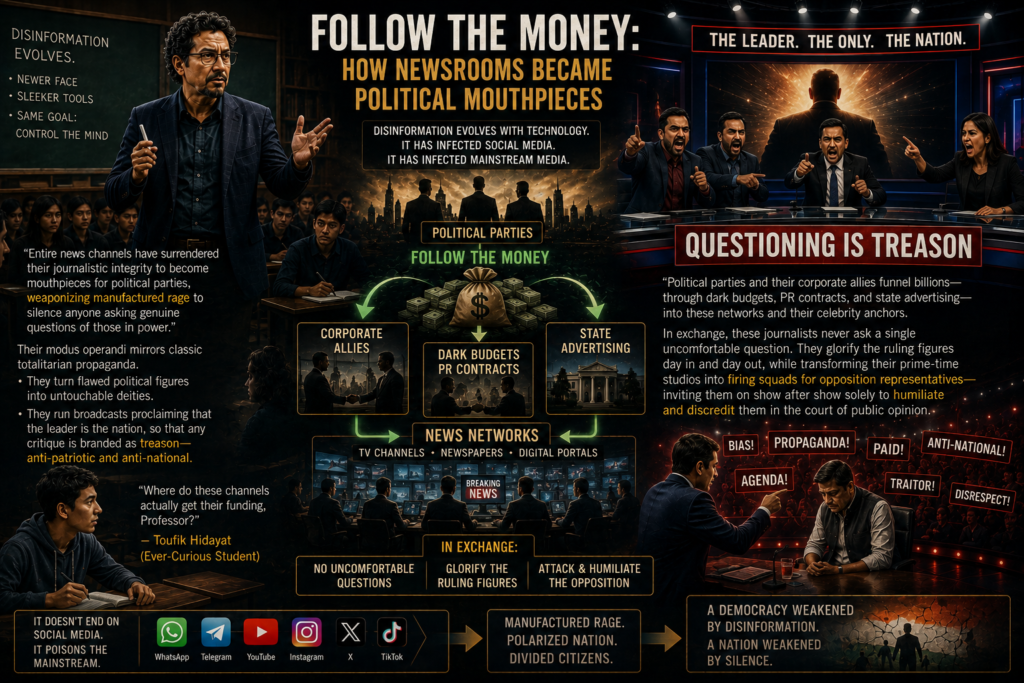
Professor Yasser walked toward the center of the lecture hall, tapping his chalk against his palm. “With every technological leap, disinformation simply evolves a newer, sleeker face. It isn’t restricted to social media platforms like WhatsApp, Telegram, YouTube, Instagram, X (Twitter), or TikTok. It has thoroughly infected mainstream broadcast media. Entire news channels have surrendered their journalistic integrity to become mouthpieces for political parties, weaponizing manufactured rage to silence anyone asking genuine questions of those in power.”
He paused, letting his gaze sweep over the middle rows. “If you examine their modus operandi, the patterns mirror classic totalitarian propaganda. They turn flawed political figures into untouchable deities. They run broadcasts proclaiming that the leader is the nation, so that any critique of a politician’s policies is instantly branded as treason—as anti-patriotic and anti-national.”
“Where do these channels actually get their funding, Professor?” asked Toufik Hidayat, an ever-curious student near the aisle, leaning forward in his seat.
“Follow the money, Toufik,” Professor Yasser replied, pointing a finger toward him in approval. “Political parties and their corporate allies funnel billions—through dark budgets, PR contracts, and state advertising—into these networks and their celebrity anchors. In exchange, these so-called journalists never ask a single uncomfortable question to those in power. They glorify the ruling figures day in and day out, while transforming their prime-time studios into firing squads for opposition representatives—inviting them on show after show solely to humiliate and discredit them in the court of public opinion.”
The Core Lesson: Why Questioning Is Your Only “Shield”
The room felt colder now. Nadia, a student in the front row, asked in a near-whisper, “So, it really is easier to fool people than to convince them that they have been fooled?”
“Precisely, Nadia. Because admitting you were fooled requires swallowing your own pride—and human beings hate the bitter taste of their own pride more than any medicine. Just ask the ‘WhatsApp Uncles’ or any graduates from ‘WhatsApp University’ when they are confronted with logic, evidence, and the cold, hard facts.”
Professor Yasser stopped and faced the class directly, his tone shifting from professorial to deeply urgent.
“Understand this clearly,” he said, holding up one finger. “We are living in the most dangerous age for the human mind in recorded history. In the past, propaganda was limited by geography and technology. A lie could only travel as fast as a horse, a newspaper, or a radio wave. Today, a lie crafted by a political IT cell in Jakarta can be on the phone of a grandmother in Aceh or a student in Papua within three seconds. The speed of the lie has outpaced the speed of our critical thinking. That is the crisis of our time.”

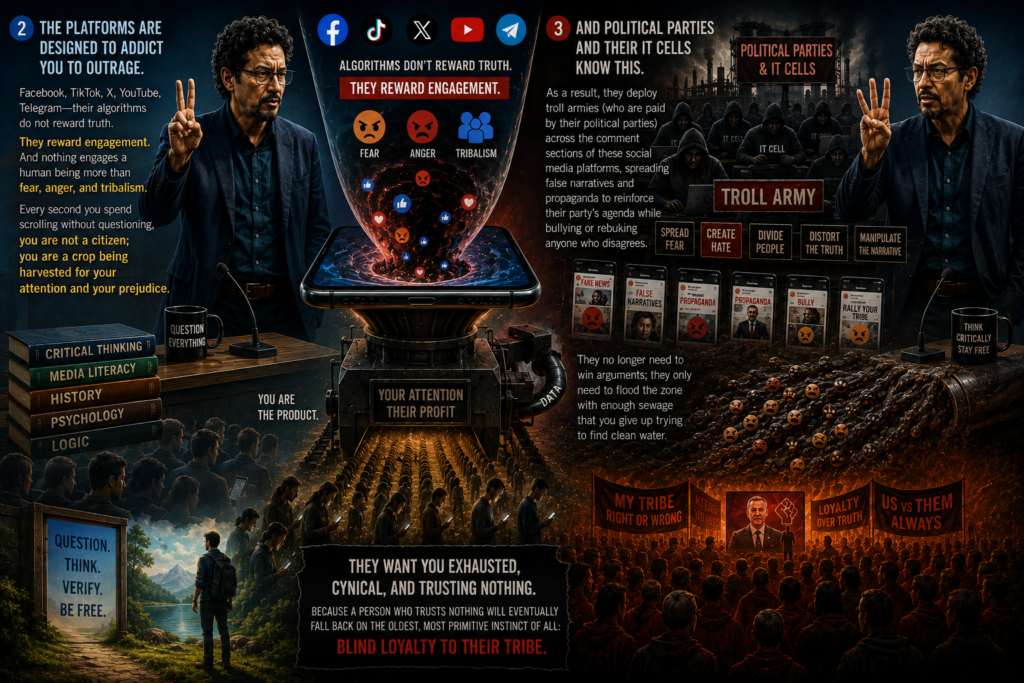
He held up a second finger. “The platforms are designed to addict you to outrage. The algorithms pushing content on your TikTok and Instagram feeds, the viral loops on X (Twitter) and YouTube, the closed broadcast rooms on Telegram and WhatsApp—none of them care about truth. They care about retention. And nothing engages a human mind faster than fear, anger, and tribalism. Every second you spend scrolling without questioning, you are not a citizen; you are a crop being harvested for your attention and your prejudice.”
He held up a third finger. “And political parties and their IT cells know this. As a result, they deploy troll armies across the comment sections of these social media platforms, spreading false narratives and propaganda to reinforce their party’s agenda while bullying or rebuking anyone who disagrees. They no longer need to win arguments; they only need to flood the zone with enough sewage that you give up trying to find clean water. They want you exhausted, cynical, and trusting nothing. Because a person who trusts nothing will eventually fall back on the oldest, most primitive instinct of all: Blind Loyalty to their tribe.”
The Boundary of Blood
The room grew heavy. Aisyah, a student wearing a cream-colored hijab, leaned forward. Her voice was quiet, almost hesitant.
“But Professor… how do you fight that? When it’s not a stranger on the internet, but the people who raised you? You can’t just block your own parents with a fact-check.”
The gentle hum of the air-conditioner suddenly seemed deafening. Professor Yasser stopped pacing. The professorial energy drained from his posture, leaving behind the quiet weariness of a son. He looked down at the pocket where his phone rested.
“You draw a boundary, Aisyah,” Professor Yasser said, his voice dropping an octave. “And sometimes, it is a painful, brutal boundary. Before this class began, my own father texted me, calling me a traitor to my faith because I refused to share a doctored video.”
A stunned, profound silence draped itself over the classroom. Students exchanged quick, uneasy glances. This was no longer a theoretical exercise.

“I do not engage,” Professor Yasser continued, his eyes cold but glistening slightly. “I make it clear that I will not share a table with fabricated rage. Even if it is my own blood. Because if we coddle the delusion to keep the peace, we are complicit in the death of truth. And I will not pay that price.”
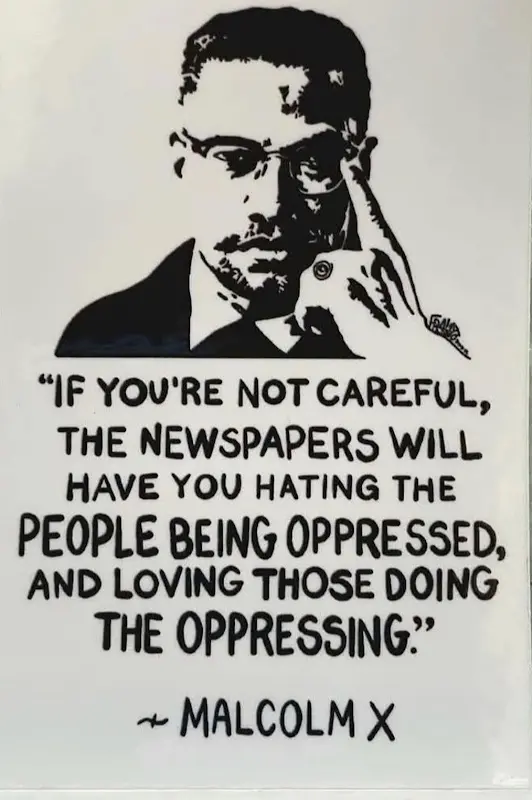
The Professor paused, letting the weight of his words settle. His voice softened, but somehow became even more penetrating. “This is why questioning is not just an academic exercise. It is an act of spiritual and intellectual survival. The very first word revealed in the Holy Qur’an was Iqra—‘Read.’ Not ‘Follow blindly.’ Not ‘Forward the chain message to ten people or face calamity.’ Read. Verify. Think.
The Prophet Muhammad, peace be upon him, said, ‘Seeking knowledge is an obligation upon every Muslim.’ Not receiving forwarded lies. Seeking. That requires effort. That requires humility. That requires admitting you might be wrong.”

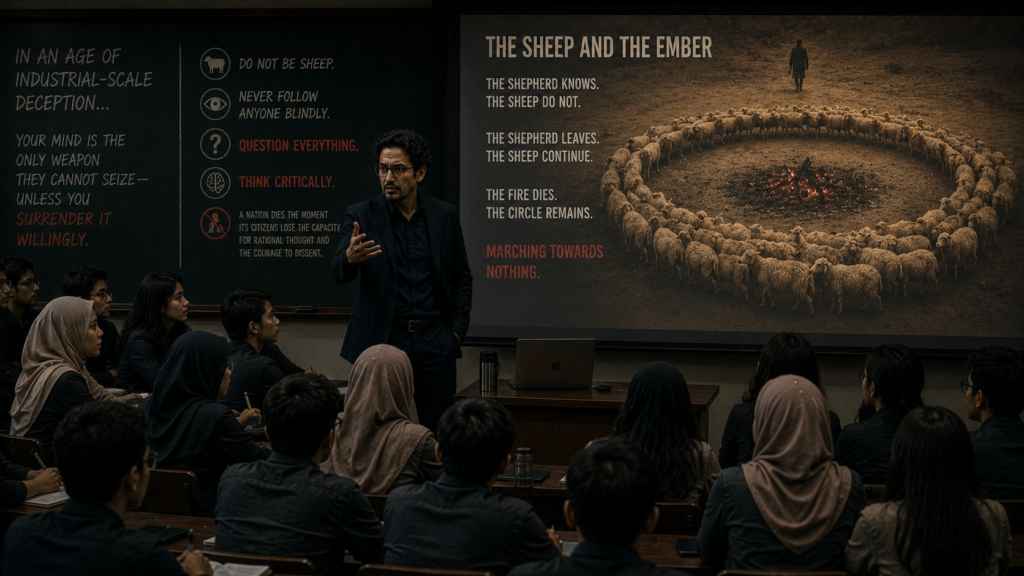
The Sheep and the Ember
Professor Yasser took a deep breath, visibly pulling his academic mantle back over his shoulders. He moved to his desk and dimmed the lights, the room falling into a heavy, expectant silence.
“What you must take from today’s lecture is this,” he said softly, his voice resonant with a profound blend of weariness and hope. “In an age of industrial-scale deception, your mind is the only weapon they cannot seize—unless you surrender it willingly. Do not be sheep. Never follow anyone blindly. Question everything. Think critically, or you will be led by those who profit from your ignorance. A nation dies the moment its citizens lose the capacity for rational thought and the courage to dissent.”
He paused, his gaze sweeping across the room. “To conclude, I want to share a short video. It is perhaps the most potent visual metaphor for the political age we now inhabit.”
On the projector screen, a dusty, sun-drenched field in rural India appeared. An old shepherd was leading his flock in a tight circle around a small, burning bonfire. Around and around they marched, a perfect, unthinking wheel of white wool.
On the third pass, the shepherd quietly stepped aside. He walked out of the frame entirely.
The class watched in absolute silence. The shepherd was gone. The bonfire was dying, its embers glowing faintly in the dust. But the sheep did not stop. They continued to march in a flawless, endless circle around the empty center, each animal staring blindly at the tail of the one directly in front of it. Marching towards nothing.
The Dismissal: A Charge to the Next Generation
Professor Yasser switched off the projector.
The lights rose slowly.
Faisal, who had argued with such certainty at the start of the hour, reached slowly into his backpack. He pulled out his phone. The screen lit up his face—harsh, blue-white, unforgiving. He opened a chat thread that had been muted for six weeks. The name at the top read Papa. An unread video sat there, sent this morning. The thumbnail showed a man in a peci cap, eyes wide with manufactured fury, pointing a finger at the camera. Faisal stared at it. His thumb hovered over the play button. Then he turned the phone face-down on the desk and slid it away from him. He did not look at the screen again. He looked at Professor Yasser, and his mouth was slightly open, as if he had started to speak and forgotten the words.
Professor Yasser touched his chest lightly, feeling the faint, muted vibration of his phone starting up again in his pocket.
“Class dismissed,” he said softly. “Wassalamu’alaikum warahmatullahi wabarakatuh.”

A Guide to Reclaiming Your Mind from Digital Manipulation:
This story is not just an academic thought experiment—it is the daily reality of anyone holding a smartphone. If you want to protect your critical thinking, your intellectual autonomy, and your peace of mind, make these principles non-negotiable rules for your digital life:
Stop Watching News Channels That Act as Political Mouthpieces:
Turn off television networks that trade in manufactured outrage, partisan cheerleading, and coordinated character assassinations. Channels that reduce complex national issues to shouting matches and glorify politicians as infallible deities are not practicing journalism—they are running state-sponsored or party-funded theater designed to hijack your amygdala.

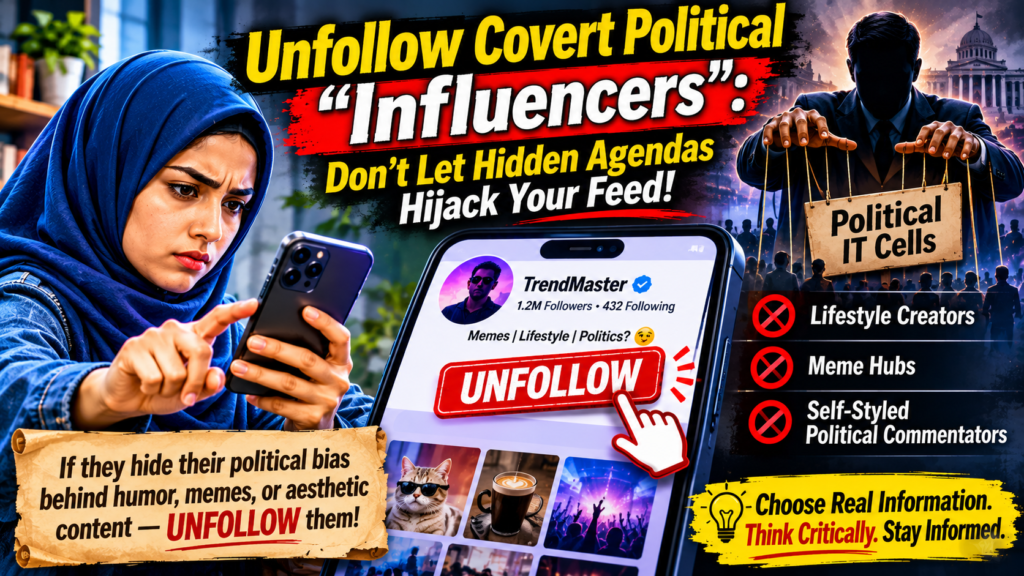
Unfollow Covert Political “Influencers”:
Clear your feeds of lifestyle creators, meme hubs, and self-styled political commentators who pretend to be objective cultural voices while quietly taking sponsorship money and talking points from political IT cells. When an account packages raw partisan bias as relatable humor or minimalist aesthetic content, unfollow them immediately.
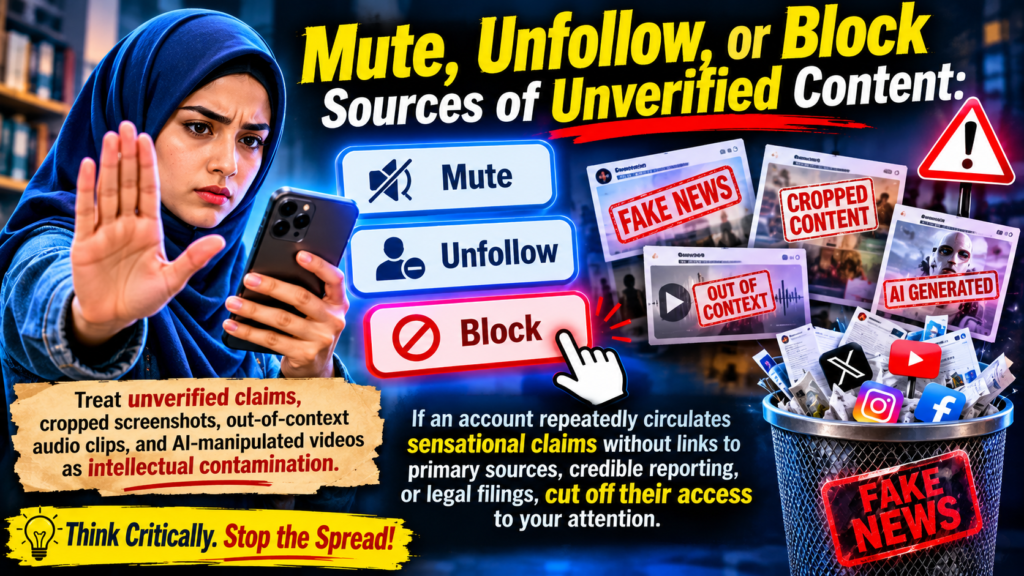
Mute, Unfollow, or Block Sources of Unverified Content:
Treat unverified claims, cropped screenshots, out-of-context audio clips, and AI-manipulated videos as intellectual contamination. If an account repeatedly circulates sensational claims without links to primary sources, credible reporting, or legal filings, cut off their access to your attention.
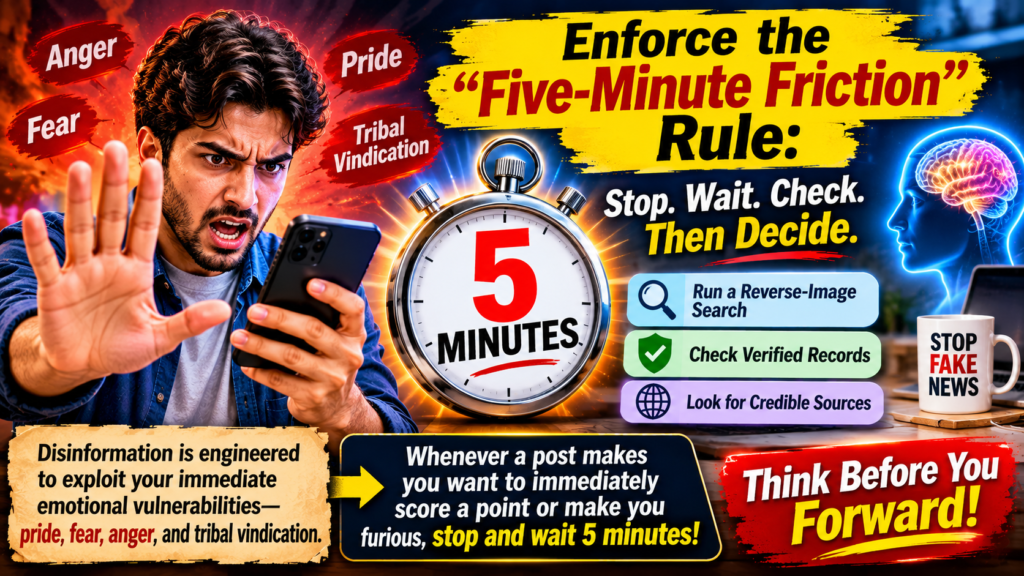
Enforce the “Five-Minute Friction” Rule:
Disinformation is engineered to exploit your immediate emotional vulnerabilities—pride, fear, anger, and tribal vindication. Whenever a post makes your blood boil or makes you want to immediately score a point against an opponent, stop. Wait five minutes. Run a reverse-image search or check verified records before hitting forward or repost.
Never Engage With Comment-Section Troll Armies:
Political IT cells deploy bot farms and coordinated trolls not to win debates, but to flood the discourse with enough abuse, spam, and noise that reasonable people retreat into silence. Engaging with them drains your energy and feeds the platform’s engagement algorithms. Block, report, and preserve your bandwidth for meaningful real-world conversations.

Do Not Sacrifice Real Relationships for Political Tribalism:
No political party will visit you in the hospital, and no party spokesperson will support your family in times of crisis. The partisan rage engineered on social media is designed to divide communities for electoral consolidation. When family or community group chats turn toxic, establish clear boundaries—do not validate fabricated fury, and refuse to let automated political campaigns destroy genuine human bonds.

Replace the Feed With Primary Sources and Deep Reading:
Algorithms are designed to keep you addicted, reactive, and superficial. Reclaim your focus by reading full policy documents, cross-checking multiple independent reports, and studying history. Knowledge requires deliberate effort, patience, and the intellectual humility to accept that you might occasionally be mistaken.

The moment you stop questioning what lands in your inbox and on your feed, you forfeit your mental sovereignty. Your mind is your most valuable asset—refuse to let an algorithm harvest it for someone else’s political agenda.
- 14 Best Panchatantra ki Kahaniya-पंचतंत्र की सम्पूर्ण कहानियाँ
- 15 Best Children Stories in English from Panchatantra 2.0
- 16 amazing Aesop ki Kahaniya-ईसप की दंतकथाएँ
- 17 Best Aesop's Fables with moral lessons for children
- Arabian Nights
- Author's Best Written Stories in English
- Author's Best Written Stories हिंदी में-लेखक की सर्वश्रेष्ठ कहानियाँ
- Baital Pachisi बैताल पचीसी हिंदी में
- Bedtime Stories for All
- Hindi Love Stories-प्रेम और रोमांस की कहानियों
- Love and Romance
- Professor Yasser Ki Class: दास्तान-ए-यासिर
- Professor Yasser's Lectures
- Vikram and Betal series: Riddle Solving Stories
You can join my WhatsApp Channel by clicking the link here

